The right mobility scooter is the one that handles your actual daily routes — your hallway, your sidewalk, your grocery store parking lot — and folds into or rides on whatever transport you use. Size, battery range, and terrain handling matter, but only in that order of your real life. Start with where you will ride most days, then work backward to the machine.
One honest caveat before we start. If your need for a scooter comes from a new diagnosis, an injury, pain, or a balance problem, talk with a doctor or occupational therapist before you buy. A clinician can also tell you whether a walker, a power chair, or a different aid fits better than a scooter.
Buying one is a decision, and the word itself is worth a second look. As Dictionary.com explains in its usage guide, choose means "to pick from several options" and is the present-tense form of the verb, while chose is the past tense — a small grammar point, but a useful frame: you are picking from several options right now, and you want to pick well, not quickly. Rushed choices are the ones people regret, which is why this guide walks through the decision in stages.
What size scooter fits your living situation?
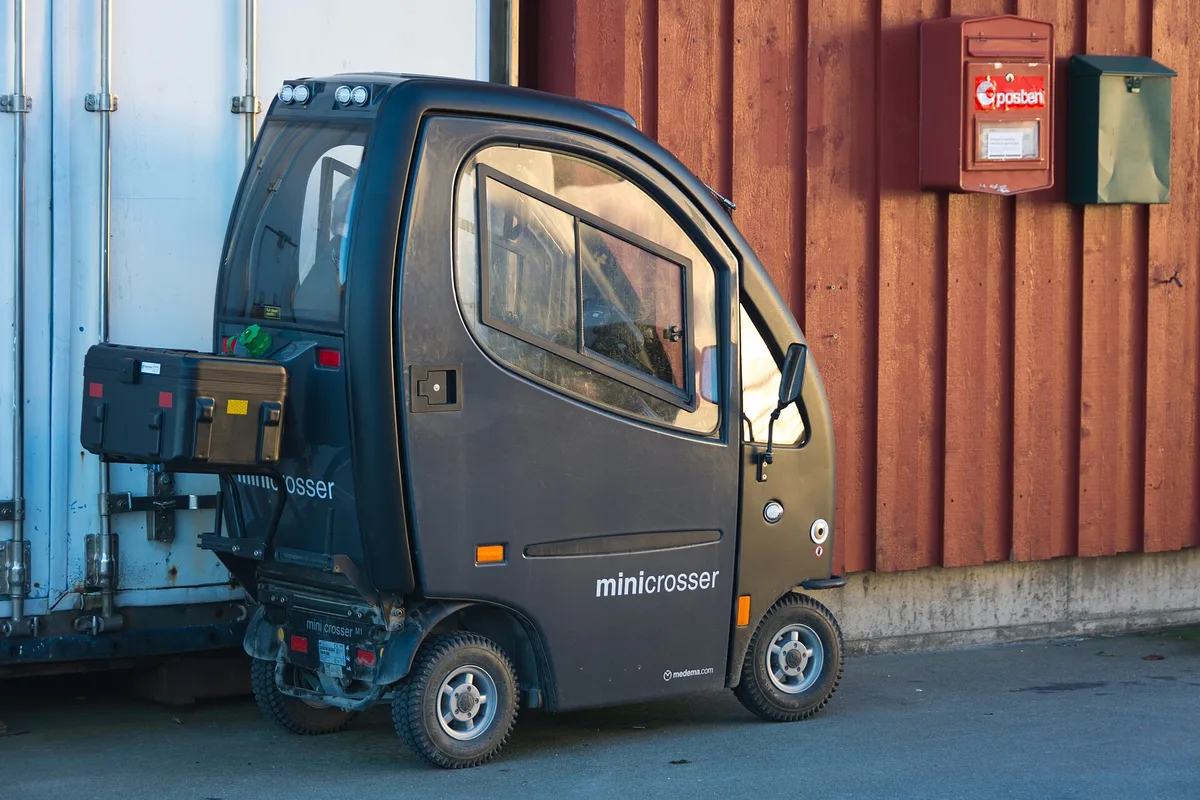
Size is the first filter, because a scooter that does not fit your home or your car is useless no matter how well it rides. Broadly, machines fall into three informal groups: compact travel models that fold or come apart into light pieces, mid-size models with more comfort and range, and large heavy-duty models built for rougher ground and higher weight limits.
Ask yourself three questions. Where will it park — a closet, a hallway, a garage? Will it travel in a car trunk, on a vehicle lift, or on public transit? And who will lift it if it needs lifting? A compact model that comes apart is often the answer for apartment dwellers and anyone who rides partly by car. A larger model suits people with a garage, a ramp, and longer outdoor routes.
Measure before you shop. Check the width of your doorways and hallways, the turning space at the end of your hallway, and the trunk opening of your car. A scooter that clears the door but cannot turn around inside is a common and avoidable mistake.
How much battery range do you actually need?
Range is often the number sellers lead with, and it is easy to overestimate what you need. The honest approach is to count your real week, not your imagined one. Add up the distance of a typical errand loop — home to store to pharmacy to home — plus any park, path, or family visit, then double it for a safety margin. This connects to our earlier piece, How Often You Actually Need to Stretch for Real Mobility Gains. This connects to our earlier piece, How Often You Actually Need to Stretch for Real Mobility Gains.
Plan for the possibility that real-world range falls short of any quoted figure. Treat a stated maximum range as something to verify with the maker's own specifications for any model you consider — a ceiling to check against, not a promise to rely on.
Charging matters as much as range. Check how a model charges and whether you can reliably reach an outlet every night. If you live somewhere you cannot easily reach power, a longer-range battery or a spare becomes part of the decision rather than an upgrade.
Which terrain can a scooter handle?
Terrain handling comes down to three features working together: wheel size, tire type, and ground clearance. As a general rule, smaller wheels and solid tires are associated with smooth indoor floors and paved sidewalks, while larger wheels, pneumatic tires, and more clearance are associated with rougher ground — but confirm the specifics for any model with the manufacturer's documentation rather than assuming.
Match the machine to your worst surface, not your best one. If your route includes one block of rough pavement or an unpaved stretch to a mailbox, that block decides what you need. A scooter built only for smooth floors will struggle there, and the ride quality on rough ground affects comfort over long stretches. For related coverage, see The 90/90 Stretch: What It Actually Trains and How to Use It.
Weather and lighting are part of terrain too. Do not assume a scooter is designed for rain, ice, or snow — check. Visibility to drivers matters on any road crossing. If you will ride near traffic in low light, look for reflective surfaces and lights on the model you choose, and confirm what the manufacturer actually includes.
What about comfort, controls, and fit?
A scooter you ride daily is a seat you own, so fit deserves real attention. Seat height, back support, armrest position, and tiller — the steering column — angle all affect how long you can ride comfortably. If you have limited hand strength or dexterity, try the throttle and brake controls in person; some models offer alternatives.
Weight capacity is a hard limit, not a suggestion. Every model carries a stated maximum, and exceeding it affects safety, handling, and the frame. Confirm the stated capacity for any model you are considering directly with the manufacturer's specifications rather than a retailer's summary. Storage matters too: a basket or lockable box turns a scooter from a ride into an errand machine.
Our analysis of how buyers get burned: they test nothing. Sit on the machine. Drive it through a doorway. Attempt the tightest turn in your home. A ten-minute test ride answers questions no spec sheet can.
Practical steps before you buy
Work through this sequence and the decision mostly makes itself:
- Map your typical week — routes, distances, surfaces, and where you park.
- Measure your doorways, hallways, turning space, and car trunk.
- Decide size class first: compact and portable, mid-size, or heavy-duty.
- Set a range target at double your longest regular loop, then check each model's stated maximum against it.
- Match wheels, tires, and clearance to your worst surface.
- Test ride, including doors, turns, and controls.
- Ask about warranty terms, service options, and battery replacement cost before you commit — batteries are a consumable part, and knowing the replacement path up front avoids a surprise later.
If cost is the obstacle, ask a clinician or a local independent-living organization about funding programs, insurance coverage rules, and used-equipment programs in your area. Rules vary widely by country and insurer, so verify what applies to you rather than assuming coverage.
When to see a professional
See a doctor or occupational therapist first if you have pain, numbness, recent falls, a new diagnosis, or any condition that affects balance, vision, or judgment. A therapist can assess whether a scooter is the right aid at all, help set seat and tiller adjustments for your body, and flag home-layout problems you have stopped noticing. If you already own a scooter and feel less stable on it than you did at first, that is also a reason for a professional check rather than pushing through.
The takeaway
Choosing well is mostly unglamorous homework: measure your rooms, count your real miles, and ride the machine before money changes hands. The evidence here is general buying reasoning, not tested product comparisons, so treat every specific number a seller quotes as something to verify against the manufacturer's own documentation. A scooter that fits your hallway, your trunk, and your worst block of pavement will serve you for years. One that only looked good on the lot will not. And if health questions sit underneath this purchase, put a clinician in the conversation before the salesperson.