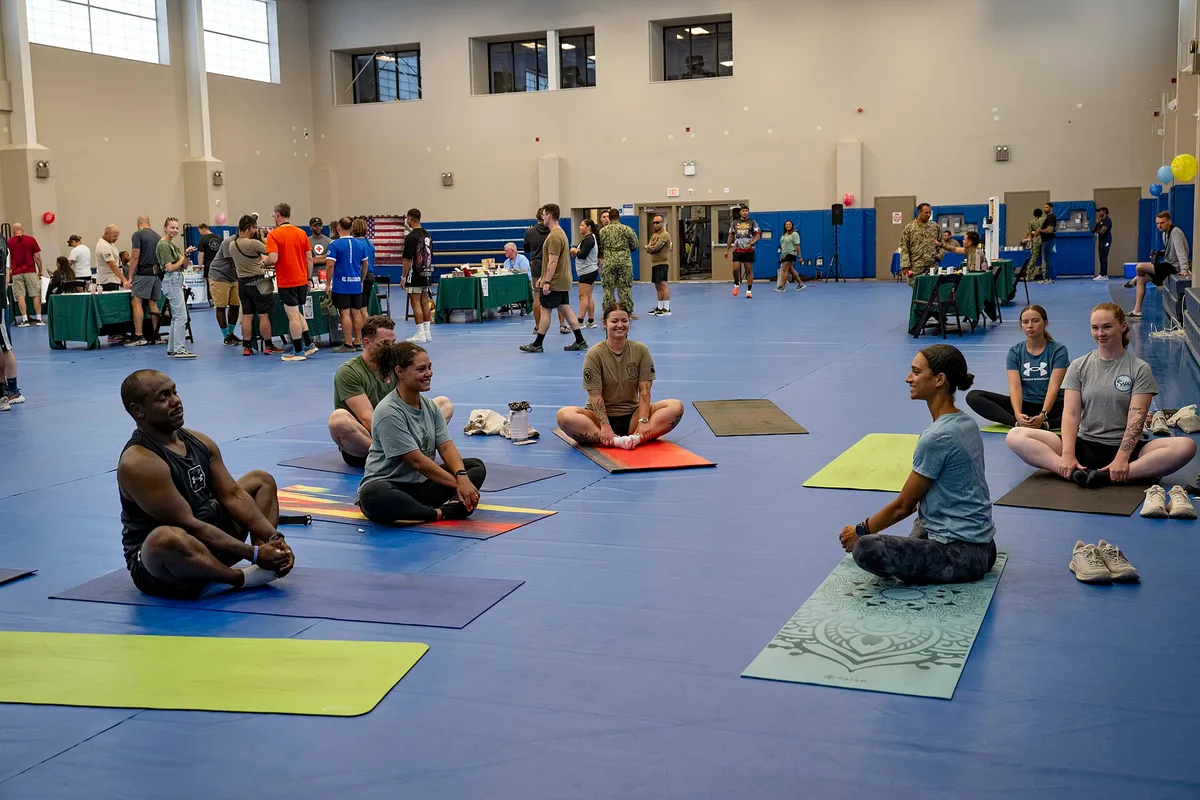
Yes, mobility yoga can help a stiff body move better — if you treat it as slow strength work in new ranges, not as a stretching performance. The sequence below targets the three areas most people lack: ankles, hips, and the mid-back. It takes about 20 minutes, needs no props beyond a wall, and suits beginners through intermediates.
One honest qualification up front. Most yoga research covers regular practice over weeks, not one session. Expect to repeat this flow several times a week before joints feel less sticky. Consistency is the whole game here.
Yoga itself is far older than the studio version most of us know. According to Wikipedia's overview of yoga, the term comes from the Sanskrit root "yuj," meaning to yoke or join, and the practices were first attested in India in the early first millennium BCE. The posture-heavy, exercise-focused style common in Western gyms is a modern adaptation — which is good news for stiff people, because the modern form is exactly the part you can bend to your own purposes.
What does mobility yoga actually mean?
Mobility means your joints can move through a full, controlled range. Flexibility is passive — how far a muscle lets go. Mobility is active — how far you can move yourself and control. Mobility yoga sits between the two: you use yoga shapes, but you move into them under your own muscle power and hold the end range actively.
That distinction changes how you practice. In a flexibility class, you might sink into a stretch and relax. In a mobility session, you ease into the shape, then firm up the muscles around the joint and hold for a few breaths. The muscles learn to be strong at the new length. That is the adaptation you want.
It also explains why this flow avoids deep passive holds. Long relaxed stretches have their place, but for range you will actually use — under a barbell, on a run, reaching a shelf — controlled end-range work trains the thing itself.
How should a stiff beginner set up the session?
Warm up first. Two or three minutes of easy movement — marching in place, arm circles, gentle cat-cow — raises blood flow and makes everything easier. Cold tissue resists; warm tissue cooperates. Never force a shape on a cold body.
Set two rules before you start. First, breathe through your nose the whole time. If you are holding your breath, you are pushing too hard. Second, stay two or three breaths short of your maximum range. The edge you can hold while chatting is the productive edge. The edge that makes you wince teaches your nervous system to guard, not to release.
Move barefoot on a non-slip surface if you can. Your feet give the rest of the chain feedback. Keep a wall nearby for balance shapes.
What is the sequence?
Run these in order. Each shape gets roughly 45 to 60 seconds, or five to eight slow breaths. The order moves from the floor up: spine and hips first, then ankles, then shoulders, then a tie-it-together flow.
- Cat-cow, slow. On hands and knees, round the spine, then arch it. Move one vertebra group at a time rather than flopping through the whole back. This wakes up the mid-back, the section most desk-bound people barely use.
- Downward dog with pedal-outs. From hands and knees, lift the hips. Alternate bending one knee while the other leg straightens. The bending knee is the point — it lets each hamstring and calf lengthen without strain.
- Low lunge, knee over ankle. Step one foot forward, drop the back knee, and press the front heel down. Lift the chest slightly. This trains hip extension on the back leg — the range tight hip flexors steal.
- Lizard lunge, hands inside the front foot. From the low lunge, bring both hands to the floor inside the front foot. Stay high enough to breathe. This deepens the hip-opening work. Shorten the stance if the front knee complains.
- 90/90 hip rotation. Sit with the front leg bent in front of you and the back leg bent to the side, both at roughly right angles. Lean toward the front shin, then switch sides. This trains hip rotation, a range most people never load.
- Deep squat hold, heels down if possible, heels on a rolled towel if not. Hold the edge of a doorframe or a wall for balance. Sink as low as your ankles allow. This is the single most useful shape in the flow for everyday squatting and lifting.
- Ankle rocks in the squat. Still in the squat, gently rock the shins forward over the toes, heels staying down. Ankle range is the limiting factor in most shallow squats.
- Thread the needle. On hands and knees, slide one arm under the other, shoulder and ear toward the floor. This rotates the mid-back without asking the lower spine to cheat.
- Wall slide shoulder opener. Stand with your back near a wall, forearms against it, and slide the arms overhead as far as the contact stays honest. Shoulders get trained in the overhead arc, not just at the sides.
- Slow sun-breath flow to finish. Stand, sweep the arms up as you inhale, fold gently as you exhale, rise back up. Three rounds. This re-teaches the whole chain to move as one piece.
Then stop. Twenty minutes of quality beats forty of grind. If a shape hurts — sharp, pinching, or one-sided pain — skip it. Discomfort from effort is fine; pain is information.
How often should you repeat it?
Range of motion responds to frequent, modest exposure more than to occasional heroics. Short sessions most days of the week beat one long Sunday battle. If you already follow a stretching routine, this flow can replace two of those sessions rather than stack on top.
Pair it with the loading work that keeps the range. Strength training through a full range is the best insurance policy on any mobility gain, which is why partial-versus-full-rep research matters to stiff people too — see our breakdown of full range vs partial reps for how that plays out in the gym. We covered a connected angle in Full Range vs Partial Reps — What the Research Actually Shows.
And expect the timeline to be unglamorous. Our guide on how often you actually need to stretch for real mobility gains covers the honest schedule: weeks, not sessions. For related coverage, see How Often You Actually Need to Stretch for Real Mobility Gains.
What this means for your training week
Our analysis: treat this flow as a maintenance tool, not a fix. It earns its slot on rest days or as a long warm-up. If your sticking point is specific — shallow squats from stiff ankles, or a press that stalls at ear height — a targeted session will outperform a general flow. We cover those cases in pieces on stiff ankles and shallow squats and shoulder mobility for overhead work.
Sitting all day undoes morning gains. If that is your reality, the hip-flexor and desk-neck guides — tight hip flexors from sitting and desk-neck tension — address the cause, not just the symptom. More of our mobility coverage lives at the Mobility hub.
What the sources did not establish: no controlled trial in the material above compares this exact sequence against alternatives, so treat the shape choices as sound general practice rather than proven protocol. The evidence base for yoga's broader effects on well-being is real but broad; the specific dose here is our reasonable reading of how mobility adaptations work, not a tested prescription.
The takeaway
Mobility yoga works when it is active, frequent, and honest about range. Move into each shape under your own power, hold the controllable edge, and repeat most days. Twenty minutes, three areas, no heroics. Your joints do not need a performance — they need a practice.