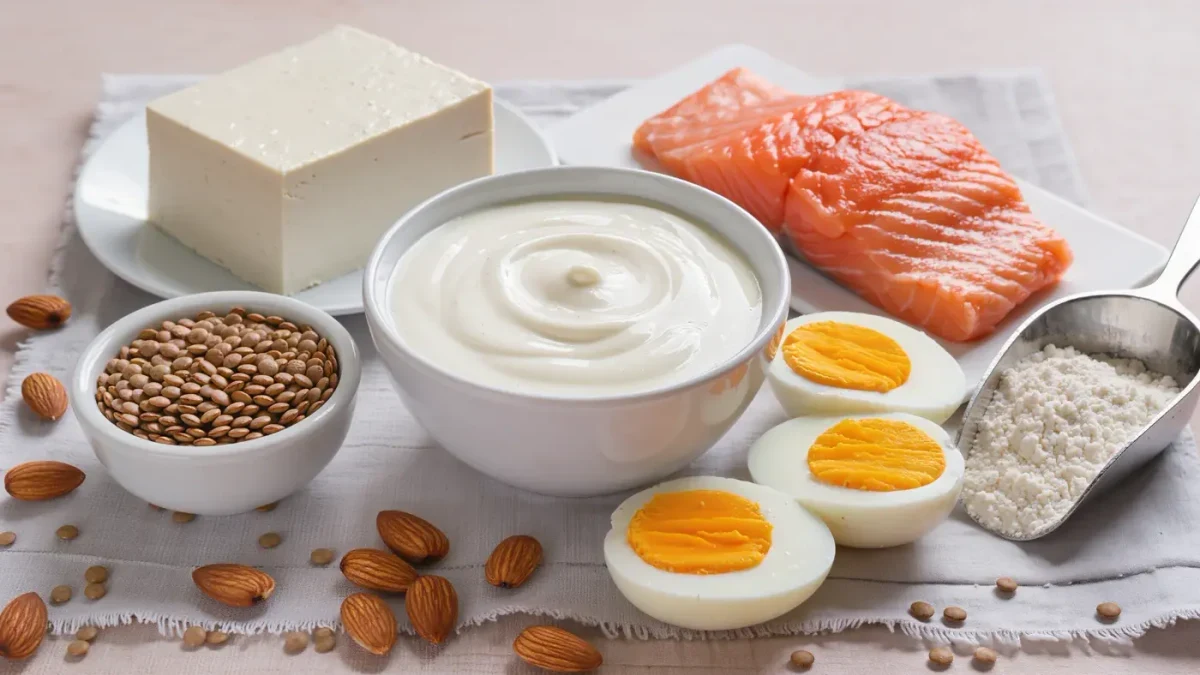

You do not need expensive protein to hit the research-backed range of roughly 1.2–2.0 g per kilogram of body weight per day for active people, per the American College of Sports Medicine, Academy of Nutrition and Dietetics, and Dietitians of Canada joint position stand (2016). Eggs, canned tuna, dried lentils, cottage cheese, and plain milk deliver 15–35 g of protein per serving at some of the lowest costs per gram in any supermarket — often a third of the price of meat or protein powder per serving. The plan matters more than the budget.
If you have kidney disease, gout, or a medical condition affected by protein intake, set your targets with a clinician or registered dietitian.
How much protein do you actually need to buy for?
The cited joint position stand places active adults at roughly 1.2–2.0 g/kg per day — 84–140 g for a 70 kg person — and the ISSN's 2017 protein stand lands in the same range, up to about 2.2 g/kg in its cited ranges for people in large training volumes. Whatever your number, the store does not care whether it comes from chicken at $9/lb or lentils at $2/lb. Amino acid completeness and total grams are what count.
Which cheap foods deliver the most protein?
| Food | Protein per serving | Why it earns a place |
|---|---|---|
| Eggs (~2 large) | ~12 g | Complete protein; the reference standard for biological value |
| Canned tuna (1 can) | ~25 g | Shelf-stable complete protein; watch frequency for mercury, per FDA advice |
| Dried lentils (1 cup cooked) | ~18 g | Plus fiber and iron; pennies per serving |
| Cottage cheese (1 cup) | ~25 g | High in casein, the slow-digesting protein |
| Plain milk (2 cups) | ~16 g | Whey and casein in one glass; cheap post-training option |
| Chicken thighs or drumsticks (4 oz) | ~20 g | Same protein as breast for a third less money |
| Canned beans (1 cup) | ~14 g | Protein plus fiber; combine with grains for full amino acid profile |
| Peanut butter (2 tbsp) | ~8 g | Calorie-dense but useful when bulking on a budget |
Serving protein figures are standard USDA food-composition values; prices vary by store and region, so compare unit prices — per gram of protein, not per package — when you shop.
Do cheap proteins build muscle as well as expensive ones?
Yes, when the details line up. The cited position stands measure protein quality by amino acid completeness and leucine content. Animal sources — eggs, dairy, fish, poultry — are complete on their own. Plant sources are often low in one amino acid, which the same guidance resolves simply: eat varied plant proteins across the day. Rice with beans, lentils with bread, or hummus with pita complement each other without any planning beyond variety.
One practical note from the cited literature: plant proteins carry extra fiber and volume, so per-meal synthesis signals can run slightly lower per gram. If most of your protein is plant-based, the ISSN stand's per-meal targets of 0.4–0.55 g/kg still apply — aim for the upper end.
A budget day that hits 120 g
- Breakfast: 3 eggs scrambled with a slice of toast — about 20 g.
- Lunch: lentil and rice bowl with yogurt sauce — about 30 g.
- Post-training: 2 cups of milk or a can of tuna on crackers — about 16–25 g.
- Dinner: chicken thighs with beans and vegetables — about 35 g.
- Evening: 1 cup cottage cheese if the day ran short — about 25 g.
Total: roughly 125 g for a day most grocery budgets handle without noticing.
Is protein powder ever worth it?
As a food, never — it is a convenience. Whey is simply the filtered protein of milk, and per the ISSN stand it works because it helps you hit daily totals, not because it is magic. If a shaker bottle is what gets your lunch to 30 g on a workday, the cost per serving is still modest. But milk, eggs, and canned fish do the same job with more micronutrients, and comparisons in the cited research show whole-food and supplemental protein support similar training outcomes when totals match.
What about mercury and canned fish?
Rotate fish types and watch frequency. The FDA's advice groups canned light tuna among lower-mercury options — roughly 2–3 servings per week for adults — while advising limits on albacore and avoiding high-mercury species like swordfish. Sardines, another cheap canned staple, are low on the food chain and consistently rated low-mercury. Canned fish's shelf life makes it the cheapest insurance policy in the protein aisle.
How do you shop protein by unit price?
Turn the label into a number you can compare. Take the price, divide by grams of protein per package, and you get cost per gram — the only figure that matters across products. Dried lentils and oats routinely land in the lowest tier; eggs, canned beans, and milk sit in the middle; boneless chicken breast and most protein powders land higher, which is why thigh meat and canned fish earn their place in a budget plan. Frozen chicken portions and dried beans bought in bags cut the per-gram cost further, though canned beans save the soaking time and remain cheap enough to justify the convenience. A 2017 commentary in the Journal of Nutrition on food-cost analysis makes the broader point that protein quality per dollar, not prestige protein sources, decides whether a household diet actually meets targets — the same logic applies to a training grocery list.
When to see a professional
See a registered dietitian if you are eating on a strict budget and training hard, since under-fueling hides as fatigue; if you manage kidney disease, gout, or iron levels; or if you are moving toward a mostly plant-based diet and want your amino acid math checked once by a professional rather than guessed forever.