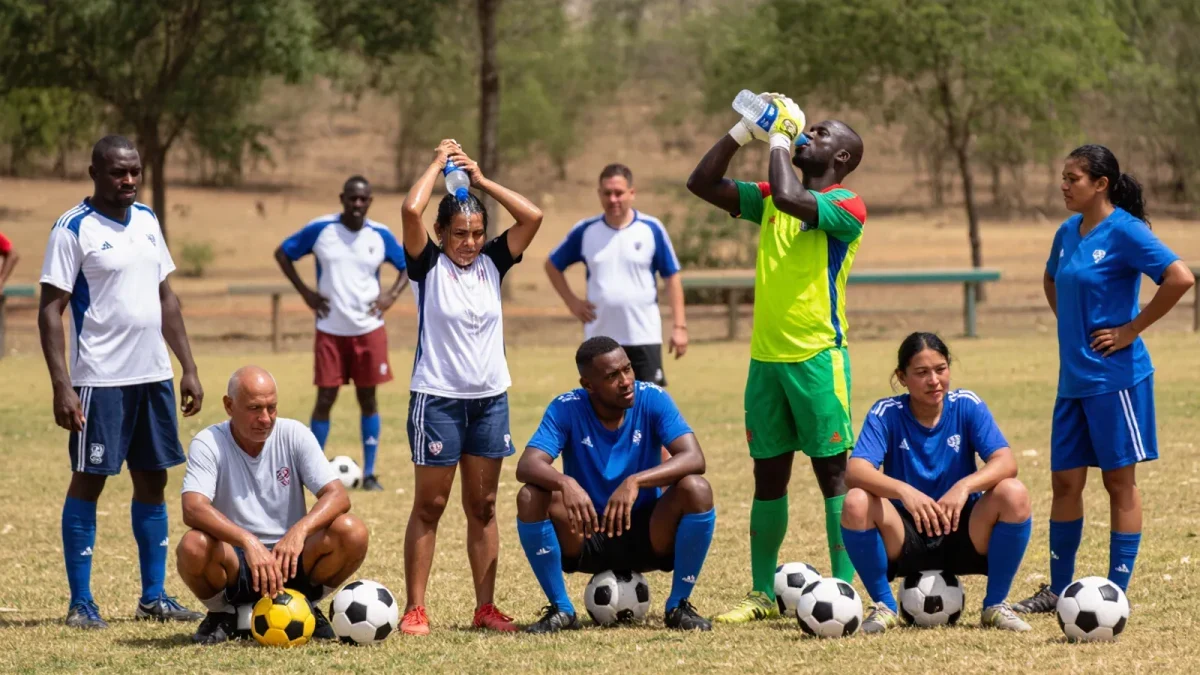

For sessions under about 90 minutes in normal conditions, drinking to thirst and replacing weight lost afterward covers your hydration needs — aggressive scheduled drinking is for long, hot, or salty-sweat situations. The American College of Sports Medicine's 2007 position stand advises that dehydration of more than 2 percent of body weight degrades aerobic performance, which is the number that separates a normal sweat from a performance problem. Weigh yourself before and after a hard session once; the difference tells you more than any hydration app.
This site publishes information, not medical advice. If you have heart or kidney conditions, take diuretics, or have ever been told to limit fluids, set your hydration plan with a clinician.
How much fluid do you lose in a workout?
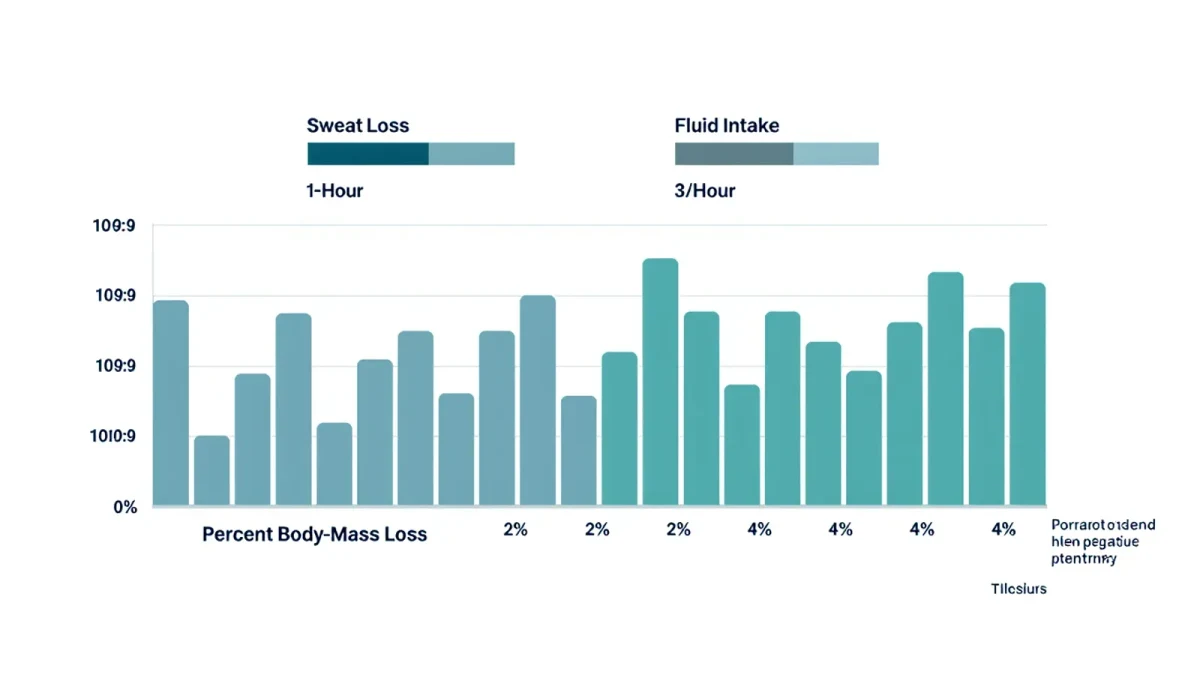
Sweat rates range enormously: the ACSM position stand cites roughly 0.5 to 2.0 liters per hour of exercise depending on intensity, heat, humidity, clothing, and the individual. Heavy sweaters in summer conditions can exceed that. Two people doing the same class can differ fourfold — which is why generic advice fails and a scale does not.
A sweat-rate check takes three steps:
- Weigh yourself in dry clothes before a typical hard session.
- Track how much you drink during it (a 750 ml bottle, two fills, and so on).
- Weigh yourself after, in the same dry clothes, towel off first.
Each kilogram lost equals about a liter of fluid deficit. Lose 1.5 kg on a 75 kg frame and you crossed the 2 percent line the ACSM ties to measurable performance loss.
When do electrolytes actually matter?
Electrolytes — mainly sodium, plus smaller amounts of potassium — are salts your sweat carries out. The ACSM stand notes sweat sodium concentrations vary widely, from roughly 200 to over 1,600 mg per liter between individuals. Sodium matters most when:
- Sessions run past 90 minutes, especially in heat.
- You are a salty sweater — white streaks on dark clothing, stinging eyes are practical clues.
- You drink large volumes of plain water during very long events, which without sodium can contribute to exercise-associated hyponatremia, a dangerous drop in blood sodium the ACSM warns against.
For a 60-minute gym session, sports drinks mostly deliver sugar your workout did not request. Water is the right tool.
Is drinking to thirst safe?
For most sessions, yes. The ACSM guidance and exercise-physiology reviews since treat thirst-driven drinking as adequate for preventing meaningful dehydration in exercise under about 90 minutes. Planned drinking — on a schedule — earns its place when heat, duration, or heavy sweat loads outpace your thirst signal, and for older adults, whose thirst response blunts with age.
The opposite risk deserves respect: the ACSM position stand explicitly warns against overdrinking. Drinking far beyond thirst during long events has caused hyponatremia, including fatalities. More water is not automatically safer water.
What should you drink after hard training?
Replace roughly 125–150 percent of the fluid deficit you measured, per guidance summarized in the ACSM literature — about 1.25–1.5 liters per kilogram lost — and include sodium, either through a normal salty meal or an electrolyte drink, so your kidneys keep the fluid instead of passing it. Plain water plus dinner does this for most people. There is no evidence expensive electrolyte powders outperform salted food and fluid for recreational training.
Does mild dehydration really hurt performance?
The honest answer: it depends on the task. Aerobic endurance shows the clearest losses beyond 2 percent body weight, per the ACSM stand. Strength and short power efforts are more forgiving, with studies showing smaller or inconsistent effects. That means a lifter in a cool gym has less at stake than a summer runner — plan accordingly rather than by slogans.
What the research did not establish
No universal formula exists. The famous eight-glasses rule has no strong evidence base behind it; fluid needs track body size, diet, climate, and training load. Individual sweat-sodium testing exists and is useful for serious endurance athletes, but the cited public guidance does not establish that recreational trainees need lab-grade precision. Start with the scale test and adjust.
How should heat change your plan?
Heat multiplies every number in this article. The ACSM position stand notes sweat rates climb steeply as temperature and humidity rise, and training in a hot gym or a summer run can push losses past 2 liters per hour for some people. Three adjustments follow from the cited guidance: weigh before and after sessions more often in hot months, since sweat rate changes with acclimatization; front-load fluids across the day rather than chugging before the session, because the body absorbs steady intake better; and expect your thirst signal to lag early in a heat wave. Acclimatization itself takes 10–14 days of repeated heat exposure, per the cited literature, during which your sweat gets saltier-first then more efficient — plan electrolyte intake higher in the first week, not lower.
What counts as enough day to day?
Away from training, let simple signals lead. The Institute of Medicine's Adequate Intake — cited by the NIH — puts total water needs at roughly 3.7 liters per day for men and 2.7 for women from all beverages and food, with food supplying about a fifth of it for typical diets. You do not need to count glasses; thirst plus pale-straw urine plus a stable morning body weight tells you the system is working. Add exercise losses on top — that is the liter-per-kilogram rule from your scale test doing its job on training days. People who chase arbitrary daily quotas often end up drinking past thirst for no measured benefit, while people who ignore thirst entirely during double sessions find the deficit the next morning.
When to see a professional
See a clinician if you experience cramping that does not respond to fluid and sodium, dizziness during ordinary sessions, dark urine despite drinking, or any history of heat illness. People with heart failure, kidney disease, or on diuretics should never self-prescribe electrolyte supplements — sodium load is a medical variable for them, not a fitness accessory.