A good fitness gear deal is a price cut on equipment you already planned to buy, at a moment when the price is genuinely lower than usual. A bad one is a full-price item dressed up with a countdown timer. The difference is easy to spot once you know what to check, and it takes about ten minutes.
The most important qualification: the best discount is the one on gear you will actually use. A rack of research-backed training principles will not save a treadmill that becomes a clothes rack. Decide what you need before you look at any sale, and the whole process gets simpler.
This guide walks through how to judge a discount, how to check a product before it ships, and what to do when something goes wrong. It is written for beginners and intermediate exercisers setting up a home gym, not for commercial buyers.
What makes a fitness gear deal real?
A real deal has three parts: a known normal price, a visible discount, and a return path if the equipment disappoints. Start by tracking the price yourself. Check the item now, then again a week or two later, before any sale you care about. Retailers run promotions constantly, so a "sale" price that matches the everyday price is not a discount at all.
Compare across sellers, not just on one site. The same dumbbell, bench, or walking pad is often listed at several retailers, and the headline discount at one may still be higher than the ordinary price at another. Add shipping to the comparison. Heavy equipment with "free shipping" that quietly costs more upfront is a common pattern.
Be skeptical of urgency. Countdown timers that reset, "only 2 left" badges, and "today only" offers that reappear next week are pressure tactics, not information. A purchase you would not make without the timer is a purchase you should not make.
How do you check quality before buying?
Read the specification list, not the marketing copy. For weights and bars, look for stated weight tolerance and material. For cardio machines, look at stated user weight capacity, footprint, and fold dimensions against the space you actually have. For anything electronic, check what the machine does without a subscription, because some connected equipment loses most of its function if you stop paying.
Search for the product name plus the word "review" and read a few sources that are not the seller. Pay attention to what reviewers say about durability after months, not just out of the box. For larger machines, check whether the maker sells replacement parts, because a cheap bench with no spare pads is a short-lived bench.
Safety matters more on powered equipment than on iron. The CPSC told consumers to stop using Sperax walking pads over a fire risk involving 125,000 units, which is a useful reminder that recalls happen in this category. Before you buy any motorized machine, search the model name with "recall" and check the Consumer Product Safety Commission's site. Register the product when it arrives so the maker can contact you if a recall follows. Readers following this should also see CPSC Told Consumers to Stop Using Sperax Walking Pads — 125,000 Units Involved.
What should you buy first for a home gym?
Buy in this order and you will rarely waste money:
- Adjustable dumbbells or a modest set of fixed weights. They cover more exercises per dollar than any single machine.
- A sturdy bench, ideally one that adjusts to incline.
- A pull-up bar or resistance bands for pulling work that dumbbells handle poorly.
- A floor mat or rubber tiles to protect the floor and dampen noise.
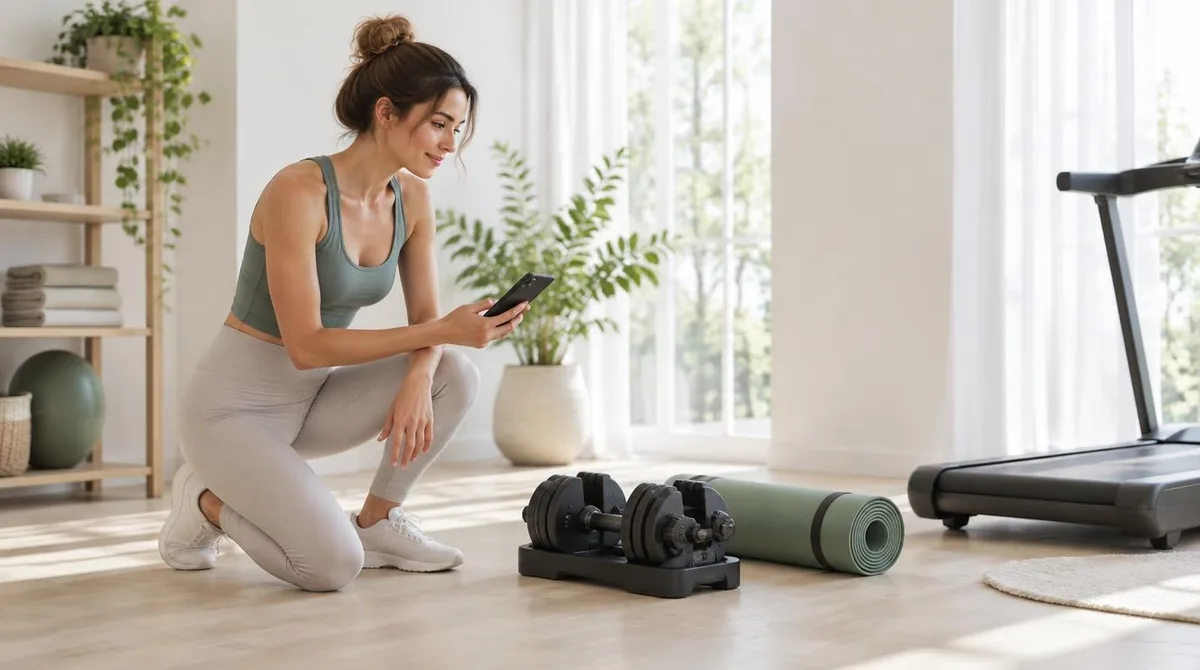
- Cardio last, and only the kind you genuinely enjoy, because a machine you dread is the most expensive purchase in fitness.
If you are new to programming rather than shopping, our guide on two strength sessions a week as the floor, not the goal explains how little equipment a real routine needs. And if you want context on how the industry prices access, our coverage of budget gyms winning beginners is a fair reminder that a cheap monthly membership sometimes beats buying hardware. This connects to our earlier piece, Planet Fitness Grew 10.5% in Q4 2025 — Budget Gyms Keep Winning Beginners.
What this means for your wallet
Our analysis: the biggest savings come from refusing to buy in the first place, not from finding a better coupon. Two habits do most of the work. First, keep a written list of what you need and a price you would consider fair for each item; buy only when both match. Second, sleep on any purchase over a set amount you choose for yourself. Overnight, the timer pressure fades and the honest question remains: did you want the equipment, or the feeling of getting a deal?
Refurbished and open-box gear is a legitimate middle path for big-ticket items. Buy it from the manufacturer or an authorized dealer when possible, confirm what the warranty covers, and inspect on arrival. Private-market used gear can be excellent value on simple iron — plates, racks, benches — where there is little to break, and far riskier on electronics where there is plenty.
Timing helps, but not in the way sale pages suggest. Prices on fitness equipment tend to dip around major sale events and again in early spring, when resolution-season demand fades. Those are patterns shoppers recognize, not guarantees, so treat them as reasons to check prices on those dates rather than promises.
When a deal goes wrong, what are your options?
Act fast. Photograph the item on arrival before you assemble it, keep the packaging until you have tested everything, and test all moving and electronic parts within the return window. If something is wrong, contact the seller in writing and state the problem plainly, with photos and the order number.
If a seller will not resolve a defect, the manufacturer's warranty is the next stop, and a credit card dispute is the one after that for purchases made on the card. For safety defects, report the product to the Consumer Product Safety Commission at SaferProducts.gov, because a report is how recalls start.
The takeaway
Judging fitness gear deals is a skill of subtraction: know the normal price, ignore the timer, buy from the list, and keep the receipt path open. The equipment that earns its space in your home is the kind you would have bought at full price — everything else was never really a deal. Once the gear arrives, the harder work begins; our guide to recovery covers the part of training that no discount code can replace.