Most fitness trends fall into three piles: ideas with real evidence behind them, ideas that are harmless but oversold, and ideas that mostly sell memberships. The trick is telling them apart before you spend money. The most useful filter is simple — does the claim come from tested research, or from a gym's own marketing page?
The answer matters because the gap is wide right now. Walk into a large club and you will find cold plunges, saunas, reformer Pilates, pickleball courts and boxing studios all under one roof, each described in confident language. Per Life Time's Reston location page, an adult membership there starts at $219 a month — a real sum, and worth knowing which amenities earn it.
This piece walks through the trends gaining traction and sorts them honestly. Some deserve your time. Some deserve your skepticism. The pattern to watch: the trends with the strongest support are usually the least exciting ones.
Which fitness trends actually have evidence behind them?
Strength training, walking, and consistent moderate cardio top the list, and nothing on the trend cycle has displaced them. The case for resistance training is the strongest in the whole field, and it does not require a boutique studio or a new gadget. Two well-planned sessions a week is the commonly cited floor, not the ceiling — our guide to the two-session minimum explains why that number keeps coming up. For related coverage, see Two Strength Sessions a Week Is the Floor, Not the Goal.
What this means for you: if a trend adds load, adds steps, or adds consistency, it is probably building on solid ground. If a trend promises a shortcut around those three things, treat the marketing as marketing.
Is recovery equipment worth the hype?
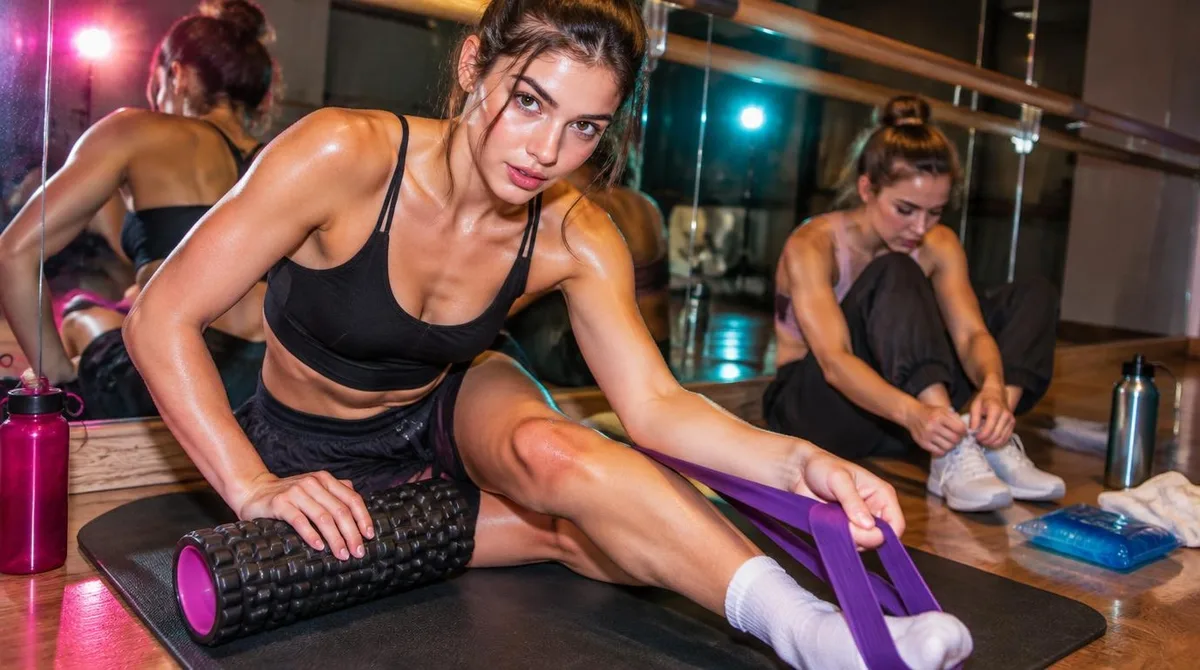
Recovery is the fastest-growing corner of the gym floor, and the claims are running ahead of the proof. Life Time's own page describes cold immersion as something that "activates circulation, reduces soreness, and builds resilience" — but that is the club describing its own amenity, not independent research confirming it. An equipment maker or venue is a reliable source for what it offers and what it charges. It is not independent proof of a performance benefit.
The honest reading: saunas and cold plunges feel good, and some people train better when recovery feels like a ritual. But the soreness and adaptation question is genuinely contested in the research, and cold water immersion right after strength work may even blunt some of the adaptation you are chasing. Our recovery coverage walks through what is settled and what is not.
Practical steps: enjoy the plunge if you like it. Just do not pay a premium membership for it on the strength of the marketing copy, and keep it away from your hardest lifting sessions if adaptation is the goal.
Are wearables and tracking apps a trend or a tool?
Wearable technology has topped the industry's annual trends survey more than once, and the devices keep getting better. But a tracker is a mirror, not a coach. It tells you what happened; it cannot tell you what to do next with any authority. The useful question is not which band is newest but whether the data changes your behavior in ways you can sustain.
Our coverage of wearables topping the fitness trends list looks at why the category keeps ranking first and where the data is genuinely good. The short version: step counts and sleep trends are reasonably useful. Recovery scores and calorie burns carry more uncertainty than the interface suggests.
What about the group formats — boxing, reformer Pilates, pickleball?
These are the trends where enjoyment is the real evidence, and that is not a small thing. A class you attend beats a program you quit. Boxing-style conditioning, reformer Pilates and racquet sports all deliver real movement, real coaching and a reason to show up. Gold's Gym's Reston location, for example, lists vinyasa yoga, GOLD'S BURN and GOLD'S FIT classes on its weekly schedule, according to the club's own page — a typical spread of formats built around scheduled, coached sessions.
Two cautions. First, class formats vary enormously in intensity and quality, and the brand name tells you little. Second, boxing-adjacent classes are usually fitness classes with boxing moves, not boxing training — fine for conditioning, but do not expect fighting skill from a cardio studio.
Onelife Fitness's Reston club bundles "Smart Start" training sessions and body composition analysis into its basic plan, per its membership page. Complimentary onboarding sessions like these are worth taking — they are a low-cost way to check whether a club's coaching style fits you before committing.
How do you judge a trend before you buy in?
Our analysis comes down to a short checklist. Run any new trend through it before you spend money or rearrange your training week.
- Who is making the claim? A club describing its own amenity is selling. A peer-reviewed study, named and dated, is evidence.
- Does it build on the basics? Trends that add load, steps or consistency compound with what already works. Trends that promise to replace it usually do not.
- What is the total cost? A $219-a-month club can be worth it if you use the pool, the classes and the courts. It is not worth it for a cold plunge alone.
- Could you keep it up for a year? Enjoyment is not a soft factor. It is the strongest predictor of whether any program produces results.
If you want a sharper eye for the marketing itself, our guide to reading a fitness story without falling for the hype covers the tells — vague mechanisms, borrowed science, and claims no one is accountable for. We covered a connected angle in Fitness News: How to Read a Fitness Story Without Falling for the Hype.
Where this leaves you
The evidence established here is modest and that is the point. The trends worth your time are the old ones wearing new clothes: strength work, regular movement, and recovery habits you can sustain. The trends worth skepticism are the ones selling certainty the research has not supplied — especially around recovery gadgets and tracking scores. What remains unknown is how any individual responds to cold exposure or a given device, and no marketing page settles that. Try things cheaply first, keep what you will actually repeat, and let the basics carry the weight.