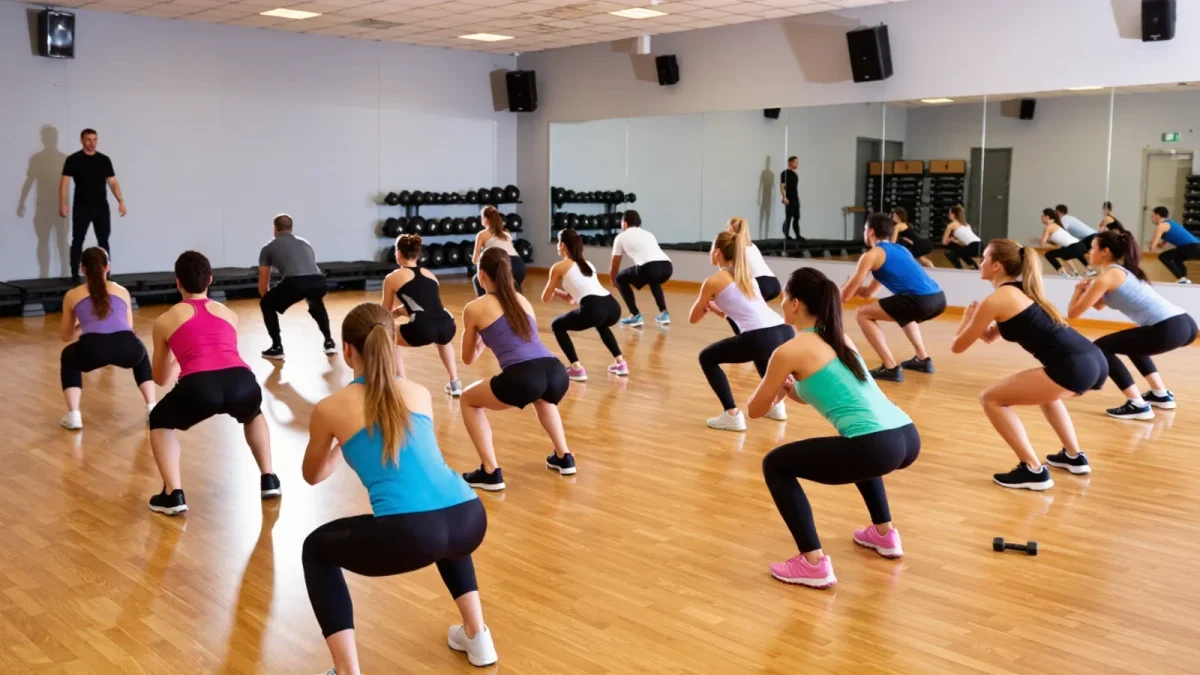

People stick with group exercise better than they stick with solo training. A 2006 meta-analysis by Burke, Carron, and colleagues in the Journal of Sport & Exercise Psychology pooled 44 studies and found that exercising in group settings produced greater adherence — more sessions attended, less dropping out — than individually delivered programs. The effect was largest when the group felt like a genuine team rather than a room of strangers, which is the part most people miss.
If you have an injury or a medical condition, get cleared by a clinician before joining a new class format, especially high-intensity ones.
What did the group-exercise research find?
The 2006 meta-analysis compared three settings: true groups with shared goals and interaction, groups where participants exercised side by side without interaction, and solo programs. Adherence followed that order. Classes with real social connection held people; parallel workouts in a shared room fell in between; training alone ranked last.
That distinction matters for how you choose. A boutique class you attend with the same regulars every week is doing something a packed gym floor with headphones cannot — it supplies obligation, familiarity, and a mild social pull on the days motivation does not show up.
Why does the group effect work?
Researchers point to several mechanisms, and they stack rather than compete:
- Fixed scheduling. A class time is a decision made once. The habit research shows stable cues build automaticity; a weekly 6 p.m. slot is a pre-installed cue.
- Accountability. Regulars notice absence. The mild social cost of no-showing is enough to tip a marginal decision toward going.
- Effort norms. Working near others who are working tends to raise effort — a finding long documented in social facilitation research, and visible in any full spin studio.
- Enjoyment. Group sessions are rated as more enjoyable by many participants, and enjoyment predicts adherence better than any program on paper.
- Structure. A coached class removes programming decisions, form guesswork, and the mid-workout "should I just leave" negotiation.
What the sources did not establish
The meta-analysis measured adherence, not fitness outcomes — showing up more does not automatically mean better results, though it is the precondition for them. It also pooled studies from structured research settings; a drop-in class at a commercial gym may lack the team-like qualities that drove the largest effects. And for people who dislike group settings, forcing one is a compliance plan that backfires.
Does the type of class matter?
For adherence, the social structure matters more than the modality. Strength circuits, spin, dance-based classes, running clubs, and recreational sports leagues all produce the group effect when the same faces recur. High-intensity formats deserve one caution: they are popular and effective for conditioning, but a beginner should confirm the class offers progression options — joining a program scaled beyond your current ability is how enthusiasm becomes an injury.
| Format | Adherence strength | Watch for |
|---|---|---|
| Recurring class, same group | Strongest | Check beginner scaling exists |
| Running club / team league | Strong | Pace groups so nobody gets dropped |
| Big drop-in class, strangers | Moderate | Fixed weekly slot helps most |
| Solo training | Weakest on average | Pair with a partner or fixed cues |
How do you choose a class you will actually keep?
- Put logistics first: pick a studio or club within fifteen minutes of home or work. Distance quietly kills more programs than boredom does.
- Choose a fixed weekly slot and defend it like an appointment, not an option.
- Try the same class three times before judging — instructor and regulars vary, and the social texture needs repetition to form.
- Match the intensity to your current base, not your ambition. Ask the instructor about beginner scaling.
- Learn a few names. The team-like quality that drove the biggest adherence effects in the research comes from knowing who else shows up.
What if groups are not for you?
Adherence is the goal; the group is one delivery mechanism. The meta-analysis found solo training worked — just less reliably on average. Borrow the working ingredients instead: a fixed schedule, a training partner for accountability, and a written program that removes daily decisions. If anxiety makes group settings genuinely unpleasant, that instinct deserves respect, not override.
When to see a professional
If you are returning to exercise after injury, pregnancy, or a long layoff, ask a clinician or physical therapist what to load first. In class settings, tell the instructor about limitations before the session starts — a qualified one will scale you. Sharp pain during any class is a stop-and-assess signal, not a form to push through.
The bottom line
Group exercise wins on the hardest variable in fitness: showing up. The Burke meta-analysis put group settings ahead of solo training for adherence, with the biggest effects in groups that feel like teams. Pick a class close by, fix the slot, go three times before you judge it — and let the room carry you through the weeks your own motivation cannot.
FAQ
Are group classes effective for building fitness, or just for attendance?
Both, when the format matches your level. The 2006 meta-analysis measured adherence rather than fitness, but a class attended consistently delivers real training volume — and adherence is the variable solo programs fail at. Check that the class offers progression and coaching feedback; attendance plus appropriate intensity is what produces results.
Do online or app-based group workouts count as group exercise?
Partially. The adherence effects in the research were strongest with genuine social interaction and mutual awareness, which livestream communities sometimes approximate and recorded sessions do not. If remote training is the realistic option, add the missing ingredients deliberately: a fixed schedule, a partner who expects you, and a recurring group call or club session.
How long should I give a new class before deciding it is not for me?
Three sessions of the same class. The social texture — instructor pacing, regulars, your own competence with the format — needs repetition to show itself, and first sessions always feel awkward. Judge the full experience after a month, not the first hour. If the intensity was badly matched, raise that with the instructor at session one.
Is a training partner as good as a class?
Close, often. A reliable partner supplies accountability and effort norms — two of the main mechanisms behind the group effect — without a membership. The weak point is single-point failure: one partner's busy week can erase both schedules. Many people run both: a partner for twice-weekly sessions and one recurring class for structure.