
Caffeine works. The International Society of Sports Nutrition's 2021 position stand concludes that caffeine reliably improves exercise performance, with effective doses of about 3–6 mg per kilogram of body weight taken roughly 60 minutes before exercise — that is 210–420 mg for a 70 kg adult, or about two to four cups of brewed coffee depending on strength. Endurance efforts show the clearest gains; strength and power work benefits less consistently. More is not better, and past a point it works against you.
Caffeine interacts with heart conditions, anxiety disorders, pregnancy, and several medications — clear your intake with a clinician if any of these apply.
How does caffeine improve performance?
Three mechanisms dominate the cited research. First, caffeine blunts perception of effort: the same intervals simply feel less brutal, per the ISSN stand. Second, it can increase fat availability as fuel during endurance work, sparing some glycogen. Third, it appears to improve muscle recruitment in some strength settings, though the evidence there is more mixed. The felt effect — a cleaner warm-up, easier focus — is real and measurable in time trials.
How much should you take, and when?
The commonly used ranges from the ISSN position stand:
| Variable | Common range | Notes from the research |
|---|---|---|
| Dose | 3–6 mg/kg | Higher doses add side effects, not performance |
| Timing | ~60 min before | Blood caffeine peaks around 45–90 min after intake |
| Form | Coffee, tablets, gum, drinks | All work; gum absorbs fastest per cited studies |
These are commonly used ranges from the cited position stand, not our prescription. Start at the low end — 3 mg/kg — and test in training, never for the first time before an event. A useful real-world caution: coffee-shop brews vary wildly, so a home-brewed cup with a known amount of grounds is a more repeatable dose than a large café order.
Does caffeine help strength training?
The honest answer is: less than it helps endurance. The ISSN stand reports small, inconsistent gains for maximal strength, with somewhat better support for muscular endurance — more reps at a given load — and for power output in some studies. If you notice your top sets feel sharper after coffee, that is consistent with the literature. If you notice nothing, the data will not argue with you.
What about genetics and habituation?
People vary. A gene called CYP1A2 controls how fast you clear caffeine: fast metabolizers show clear performance benefits in cited studies, while slow metabolizers sometimes show none or even worse outcomes at the same dose. Regular users also build tolerance to some effects. If your morning coffee barely registers anymore, the performance edge may have faded with it — occasional strategic use preserves more of the effect than automatic daily mega-dosing.
When does caffeine hurt your training?
Know the failure modes:
- Evening sessions. Caffeine's half-life runs roughly 5–6 hours in most people, so a 5 pm dose of 300 mg leaves meaningful amounts circulating at 11 pm. Sleep loss then costs you more adaptation than the caffeine bought — the ISSN stand notes sleep disruption is a documented side effect at performance doses.
- Anxiety and jitters. Doses at or above 6 mg/kg raise the odds of jitters, gut distress, and a racing heart — none of which help a heavy session.
- Stomach sensitivity. Coffee on an empty stomach before sprints is a common regret. Test with food.
Doses above 9 mg/kg show no added benefit in the cited research and more side effects — the ceiling is real.
What the evidence did not establish
The research base skews toward trained endurance athletes, mostly young men, in laboratory time trials. Whether your Tuesday spin class benefits equally is plausible but not proven at the same effect sizes. Effects of caffeine on muscle growth itself — as opposed to session performance — remain poorly established. And the ISSN stand notes data on women, older adults, and adolescents are thinner than the headline conclusions suggest.
What about caffeine pills and energy drinks?
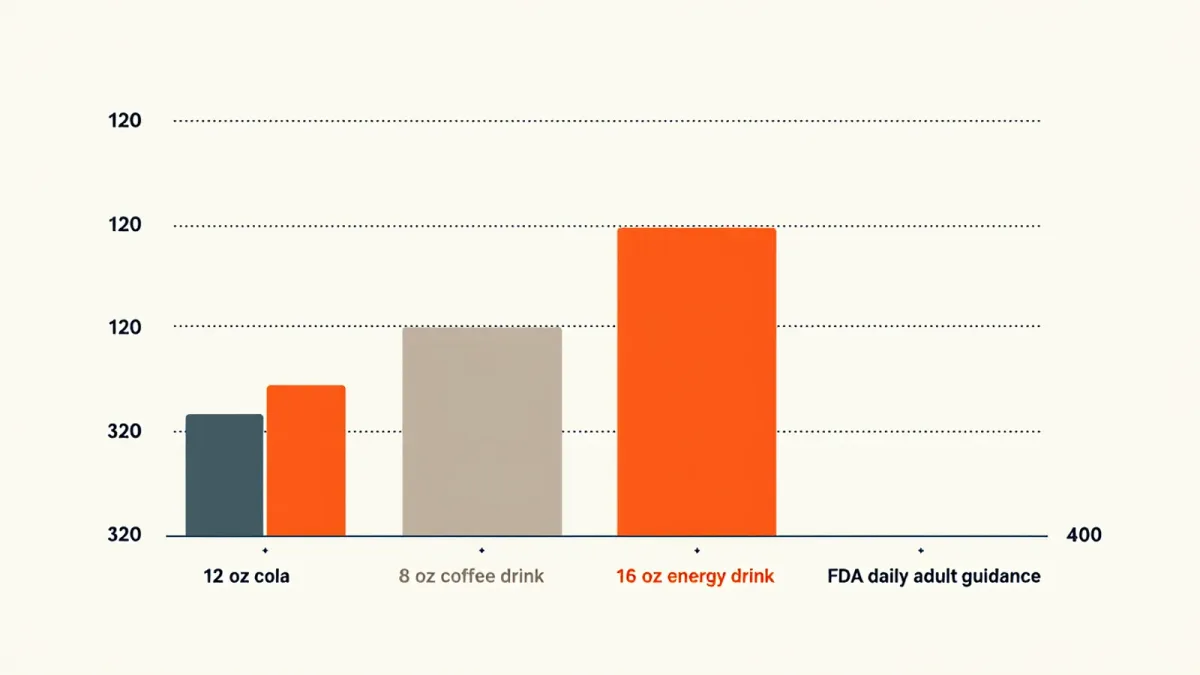
Both deliver caffeine; the differences are dose control and extras. Caffeine tablets list their milligrams exactly, which makes them the most repeatable dose in the cited performance research. Energy drinks add sugar and variable caffeine — some popular cans hold 150–300 mg — and a 2017 review in Frontiers in Public Health documented cardiovascular events, mostly in people who drank several cans in short periods or mixed them with alcohol during exercise. The ISSN stand does not require any specific form. Whatever you choose, count total daily caffeine from coffee, tea, soda, and pre-workout powders together; the FDA's general adult guidance caps moderate intake at about 400 mg per day, a ceiling the cited sports research does not push you past.
How do you build your own caffeine test?
Run it over three normal training weeks. Week one, train uncaffeinated and record your key set loads or interval splits — that is your baseline, and yes, it may be unflattering. Week two, take 3 mg/kg sixty minutes before the same sessions and log the same numbers plus a one-to-ten gut-and-jitters note. Week three, adjust: bump to 4–5 mg/kg if gains appeared without side effects, hold the dose if the week felt sharp, or drop caffeine from the session type entirely if you felt wired but performed the same. This is the ISSN stand's advice in miniature — individual response varies enough that published averages are only a starting point, and three weeks of honest logging beats any dose chart on the internet.
When to see a professional
Talk to a clinician before using caffeine as a performance tool if you have high blood pressure, an arrhythmia, an anxiety disorder, reflux, or you are pregnant — current guidance suggests limiting caffeine substantially in pregnancy. Also see a professional if you find you need caffeine to function rather than to train; dependence and withdrawal headaches are common and treatable.