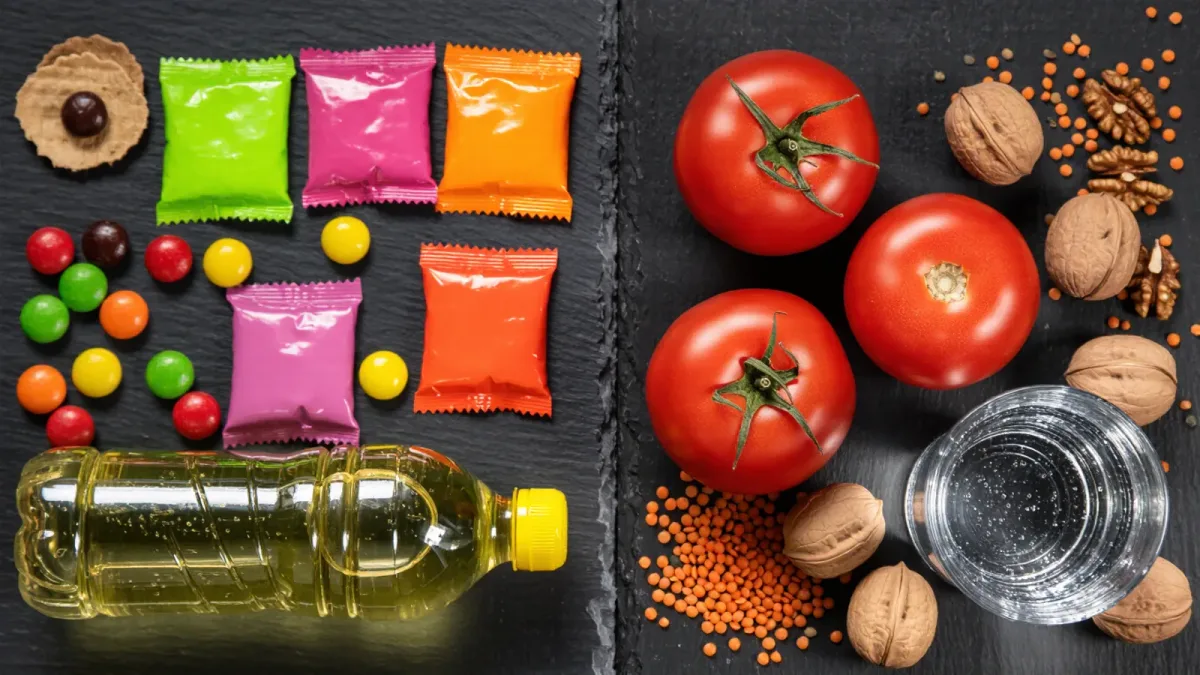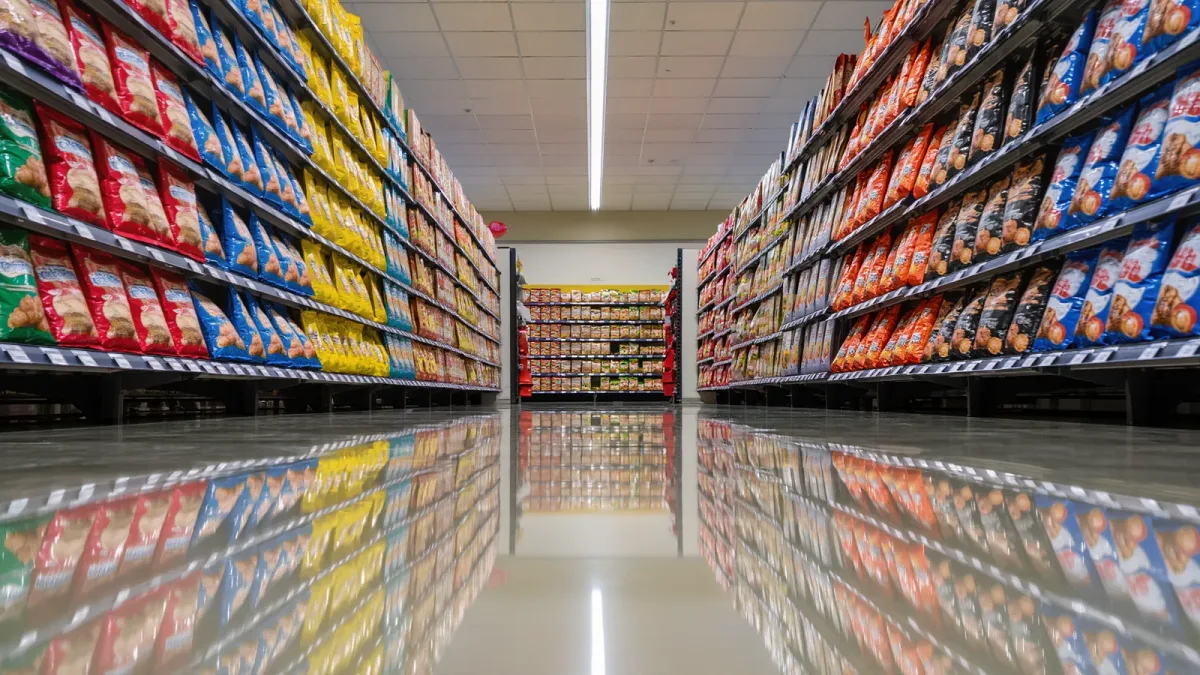

The strongest finding in this area is about appetite, not performance: in a 2019 controlled feeding trial by Hall and colleagues, published in Cell Metabolism, adults eating an ultra-processed diet consumed about 500 more calories per day than the same people ate on a matched unprocessed diet — both diets offered to the same fullness, in the same facility, over two weeks each. For anyone training, that calorie gap quietly undoes the work. What the trial did not establish is long-term performance or body-composition effects, and the causal picture beyond this one study is still debated by researchers.
If you have an eating disorder history, diabetes, or a medical condition affected by diet change, work with a clinician or registered dietitian rather than restructuring food alone.
What counts as ultra-processed?
Researchers use the NOVA classification, developed at the University of São Paulo, which sorts food by degree of processing. Group 4 — ultra-processed foods — covers industrial formulations built from refined substances plus additives: soft drinks, packaged snacks, mass-produced breads, reconstituted meats, most breakfast cereals, and ready meals. The category is broad, and critics rightly note it lumps foods with very different nutrition profiles — flavored yogurt and candy share a group. That sloppiness is a real limitation of the research area, not a reason to ignore it.
Two facts give the category weight. First, ultra-processed foods supply roughly 57 percent of calories in the average American adult's diet, per the 2016 NHANES analysis by Martínez Steele and colleagues in BMJ Open. Second, higher intake tracks with higher risks of cardiovascular disease and all-cause mortality in large French and Spanish cohort studies published in 2019 and 2016 respectively — observational links, not proof of cause, a distinction their own authors state.
Does eating ultra-processed food hurt your workouts directly?
Here the honest answer is: mostly not in the way headlines imply. No solid controlled evidence shows that a diet containing some ultra-processed foods weakens strength sessions or blocks muscle growth when protein, total calories, and micronutrients are adequate. What the Hall trial shows is an easier path to overeating — and for lifters eating to gain or lose weight, calorie control is the whole game. The practical risk is indirect but large.
How does the 500-calorie finding actually work?
The Hall trial is worth understanding because it is unusually rigorous — one of the few diet studies that locked people in a clinical unit and controlled every bite. Both diets were matched for presented calories, macronutrients, sugar, sodium, and fiber. People still ate about 500 kcal more per day on the ultra-processed version, mostly from extra carbohydrates and fat at meals and faster eating rates. The researchers proposed texture and palatability as drivers; they did not prove a mechanism, and they said so.
| What the trial showed | What it did not show |
|---|---|
| ~500 kcal/day higher spontaneous intake on the ultra-processed diet over 2 weeks | Whether the effect persists over months or years |
| Faster eating and higher meal energy density on the UPF arm | Which ingredient or additive caused it |
| Short-term weight change of ~0.9 kg on UPF, ~0.9 kg loss on unprocessed | Long-term body-composition or performance outcomes |
Follow-up analyses suggested most of the effect sat in the solid-food meals rather than beverages — but the exact driver remains an open question in the literature.
What should a trainee actually do?
Keep it boring and repeatable:
- Build most meals from foods you recognize as ingredients: meat, fish, eggs, dairy, legumes, rice, potatoes, oats, vegetables, fruit.
- Treat ultra-processed foods as tools with jobs — a protein bar before training, a sports drink on a long ride — rather than default meals.
- Watch protein targets first. Plenty of lifters under-eat protein while over-eating everything else; fixing that one number improves most diets overnight.
- Do not demonize. A diet is a weekly average. Bread, yogurt, and canned beans — some processed, some ultra-processed by NOVA — are affordable, useful foods.
Why is the science contested?
Say it plainly. NOVA critics argue the classification conflates processing with nutrient quality, and some ultra-processed items — whole-grain packaged breads, fortified cereals — carry real nutrition value. Cohort studies show association, not causation, and people who eat more ultra-processed food also differ in income, smoking, and activity. The Hall trial is controlled but two weeks long, with 20 participants. The reasonable position: strong enough signal to limit UPF where it crowds out whole foods, honest enough to admit the evidence has limits — which is where this field stands as of early 2026.
How do you read a label without obsessing?
Use one pass, not a scorecard. Check three lines in order: protein per serving against your per-meal target, fiber — a decent marker of whole-food content, since the Hall trial's diets matched fiber deliberately — and added sugar. If a packaged food clears your protein number, carries real fiber, and does not read like a dessert, its NOVA category matters less for your training than whether it fits the meal. This pragmatic filter echoes what the cited critics of NOVA argue from the other direction: processing category and nutrition usefulness overlap imperfectly in both directions. Save the strict whole-food discipline for the meals you cook at home, use packaged food deliberately where it solves a real problem — travel days, work lunches, post-session convenience — and stop before food rules start shrinking your life.
When to see a professional
See a registered dietitian if your eating feels driven by packaged-food cravings you cannot moderate, if you are cutting or gaining weight for a sport, or if a medical condition complicates diet change. People with disordered-eating histories in particular should not use ultra-processed food categories as a moral filter — food rules can do more harm than the foods.