
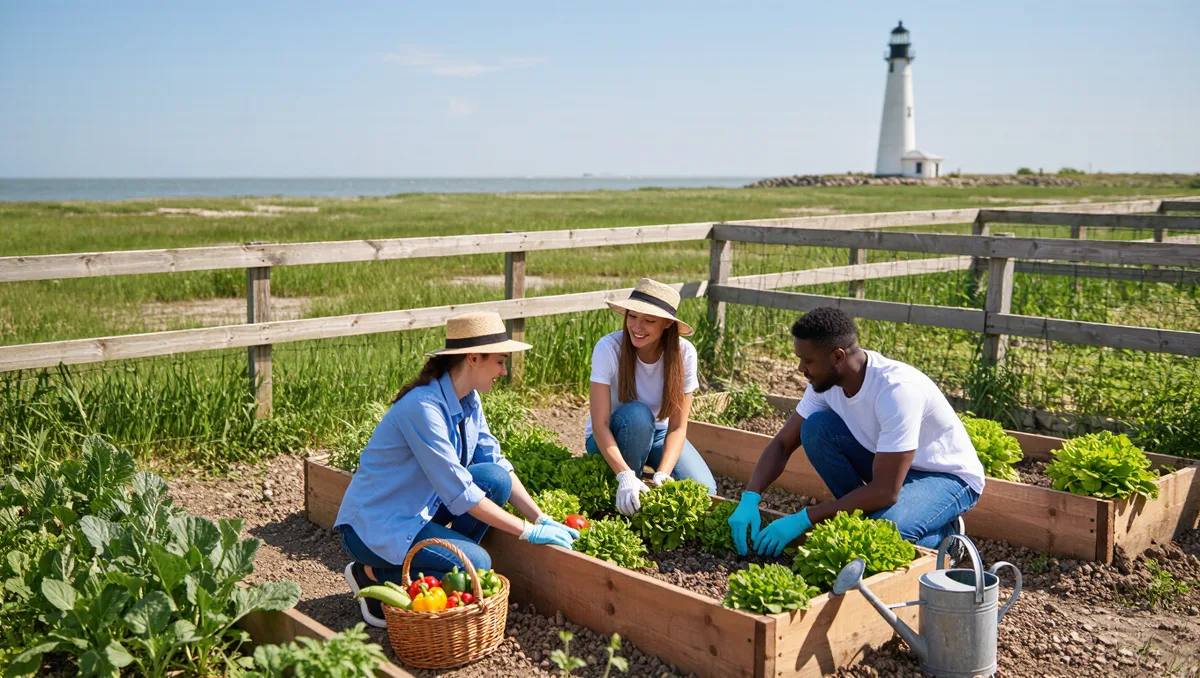
Worcester County, Maryland, is handing community organizations money to run nutrition projects. The Worcester County Health Department is requesting proposals for chronic disease prevention and nutrition work after receiving funding from the Maryland Department of Health, according to CoastTV.
Two project types are on the table: an ADA-compliant community garden, with up to $2,500 per organization and $5,000 available in total, and an "eating smart and being active" program, with up to $5,000 per organization. Applications are due by 4:30 p.m. on Nov. 13, 2026, and awards will be made after Dec. 1, 2026. This connects to our earlier piece, How Much Protein Do Active Adults Actually Need?. This connects to our earlier piece, How Much Protein Do Active Adults Actually Need?.
The story matters less for its dollar figures than for what it shows about how nutrition funding reaches people in this one case. State money flows to a county health department, which then pushes it down to community organizations — the groups that already have meeting rooms, members and trust. If you care about eating better but find nutrition advice abstract, this is the layer where it becomes a raised garden bed or a weekly class in your town. Our nutrition coverage follows the same logic: everyday access beats perfect plans.
What is Worcester County actually funding?
The garden project is specific. Organizations would cultivate, harvest and maintain a community garden in the county, provide the produce to the community, and make the garden ADA compliant by including one or two raised garden beds. That last detail is the interesting one. Raised beds are what make a garden usable for someone who cannot kneel or reach the ground — older adults, wheelchair users, people with joint pain. Building accessibility into the grant requirements, rather than leaving it as an afterthought, decides who gets to participate.
The second project, the eating smart and being active program, has clearer strings attached. To qualify, an organization must serve Worcester County locals or employees, have a large meeting room available for weekly sessions, be willing to promote and recruit participants, and host the sessions in collaboration with the Health Department. Funded organizations also have to develop healthy food-related policies and link residents to community gardens, food pantries or other healthy food resources.
Why the structure of these grants matters
Notice what the county is buying with its up-to-$5,000 grants. Not a one-off event, but weekly sessions in an existing room, run by an organization that already recruits its own people. That is a bet on infrastructure over novelty. A funded organization keeps its meeting room, its mailing list and its volunteers after the grant cycle ends — which is more than a pop-up health fair can say. Readers following this should also see Evening Training and Nutrition: What to Eat After Late Sessions. Readers following this should also see Evening Training and Nutrition: What to Eat After Late Sessions.
The policy requirement is the other structural piece. Grantees are expected to develop healthy food-related policies, not just run classes. That shifts the work from telling individuals what to eat toward changing what an organization offers by default. It is a modest version of the shift public health researchers describe when they talk about moving from individual advice to environment change. The county's own framing — the funding also covers "the built environment" — points the same direction.
What the money can and cannot do
Keep the amounts in view. Up to $2,500 for a garden, with $5,000 total across all garden applicants, is seed money in the literal sense. It buys beds, soil, tools and seeds. It does not buy a staff position or a permanent program. The county said all grant awards depend on the quality of proposals received and the number of requests, so even the headline figures are ceilings, not commitments.
That is not a criticism — it is what this tier of funding is for. Small grants lower the barrier for small organizations to try something. The open question, which the announcement does not answer, is what happens after the funded season: whether gardens get maintained year over year and whether weekly programs continue. A single grant cycle cannot establish that. Anyone tracking county-level health funding should watch for a follow-on round.
How to apply, step by step
- Attend the virtual pre-proposal orientation on Google Meet, scheduled for Oct. 29, 2026 at 2:00 p.m. RSVP is required in advance.
- Download the digital application packet from worcesterhealth.org.
- Submit your application to the Worcester County Health Department Prevention Services Unit by 4:30 p.m. on Nov. 13, 2026.
- Awards will be made after Dec. 1, 2026.
If your organization serves Worcester County and has a large meeting room, the eating smart and being active program is the larger of the two pots. If you have land and volunteers but no room, the garden route is the fit. Either way, the orientation meeting is where the county will answer the questions the announcement leaves open.
The wider picture for everyday exercisers
Food access is training fuel. A community garden that supplies produce and a weekly class that teaches practical eating habits do more for a recreational athlete's consistency than any supplement protocol — the boring inputs, again, beat the optimized ones. For readers outside Worcester County, the takeaway is to check whether your own county health department runs a similar pass-through grant program; in this case, the Maryland Department of Health provided funding that the Worcester County Health Department is passing through to community organizations, and local application windows are easy to miss. We track these developments in our health news section.
What the announcement establishes: a county is distributing state money for accessible gardens and weekly nutrition programming, with clear deadlines and modest caps. What it does not establish: how many awards will be made, who the recipients will be, or whether the funded projects continue beyond this cycle. Those are the questions worth asking when the awards are announced after Dec. 1.