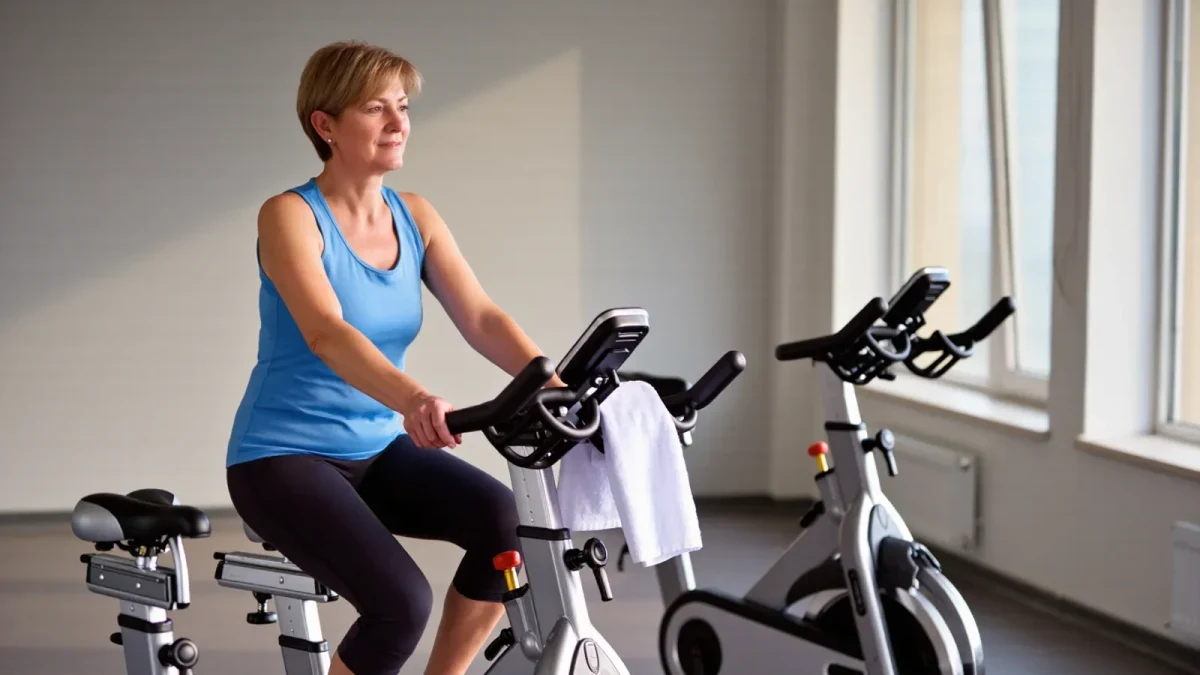

For most everyday lifters and runners, light activity beats total stillness on the day after hard training. A 2018 systematic review by Ortiz and colleagues in Sports Medicine found active recovery produced small benefits for lactate clearance and perceived recovery after intense exercise, though it did not clearly outperform rest for reducing soreness. The honest translation: a 20–30 minute easy walk or spin helps you feel better sooner, but a full rest day is not a failure — it depends on how deep the fatigue goes.
If you are recovering from an injury, managing a heart condition, or training through pain, clear any plan with a clinician or qualified professional first.
What counts as active recovery?
Active recovery is low-intensity movement on a day you are not training hard. The working definition from the reviewed research: effort low enough that you could hold a full conversation, heart rate far below training zones, duration usually 20–40 minutes. Walking, easy cycling, gentle swimming, mobility work, or an unloaded version of your sport all qualify. If you are checking your watch and pushing pace, it is not active recovery — it is a workout wearing a recovery costume.
The Ortiz review (2018) focused on short active recovery between efforts and in the hours after sessions; the everyday version — the easy day between hard days — extends the same principle: keep moving, gently, so blood flows and stiffness does not set up shop.
What does active recovery actually do?
Mechanically, easy movement does three modest things the research supports:
- Clears byproducts faster. Blood flow during light activity clears lactate and metabolic byproducts faster than sitting, per the Ortiz review — which matters most between bouts of the same competition, not between Tuesday and Thursday.
- Reduces stiffness. Movement on a sore day feels worse for the first five minutes and better for the next ten hours. That is circulation and tissue temperature, not magic repair.
- Builds volume without stress. Easy days add low-stress aerobic work and daily movement energy — the NEAT the ACSM's physical activity guidance counts toward weekly totals.
What it does not do, per the same evidence: actively repair muscle microdamage faster, or clearly reduce delayed soreness better than rest. The soreness curve follows its own 24–72 hour timetable either way.
When is a full rest day the better choice?
Rest days win in specific situations, and choosing them is a skill, not softness:
| Situation | Better choice |
|---|---|
| Mild soreness, normal sleep, decent energy | Active recovery — walk, easy spin, mobility |
| Deep fatigue, short or broken sleep this week | Full rest — the nervous system needs the downshift |
| Sharp or worsening pain with movement | Rest plus a professional assessment, not more movement |
| Two hard days stacked ahead (race weekend) | Active recovery keeps the legs fresh without adding load |
| Life stress is crushing (work, travel, illness) | Full rest — total load is total load |
One widely used safety principle belongs here. Gabbett's 2016 work in the British Journal of Sports Medicine on the acute-to-chronic workload relationship argued that injury risk climbs when spikes in recent load outpace what the body is accustomed to. An easy day or a rest day is how you stop a spike from becoming a streak of forced days off.
How hard should active recovery be?
Easy enough to feel almost too easy. Practical guardrails used across recovery protocols:
- Keep effort at roughly 3 out of 10 — conversation flows in full sentences.
- Keep it short: 20–40 minutes is enough; there is no dose-response heroism here.
- Pick joint-friendly modes: walking, flat cycling, swimming, or a light mobility circuit.
- Monitor tomorrow, not today. If the easy day left you more drained, it was too hard — cut the intensity next time, not the habit.
A sample recovery week
- Mon: Hard strength session.
- Tue: Active recovery — 30-minute walk plus mobility.
- Wed: Hard intervals or heavy lifting.
- Thu: Full rest if sleep was short; easy spin if you feel normal.
- Fri: Moderate full-body session.
- Weekend: One long or hard session, one genuinely easy or off day.
Can every rest day be active?
Most weeks, yes — as long as the intensity stays honest. But a program where nothing is ever fully still usually hides a deeper issue: the training days are not hard enough to require real recovery, or the athlete cannot tolerate stillness. Neither is a virtue. One or two genuinely restful days a month — a slow weekend morning, no alarm, no session — are part of a sustainable training life, and the body of research on overreaching suggests pushing through accumulating fatigue is where progress stalls, not where it compounds.
When to see a professional
See a clinician or physical therapist if soreness lasts beyond five days, if pain is sharp or localized rather than diffuse, or if fatigue persists despite several genuine rest days. Persistent exhaustion despite adequate rest, food, and sleep is a medical question, not a programming one — and it deserves a professional answer.
FAQ
Is it better to rest completely or move on rest days?
For mild post-training fatigue, light movement usually leaves you feeling better, per the Ortiz review (Sports Medicine, 2018) — active recovery improved perceived recovery and cleared byproducts faster than rest. But full rest wins when sleep is short, stress is high, or fatigue is deep. Match the day to the fatigue, not to a fixed rule.
How long should active recovery sessions be?
Twenty to forty minutes at conversational effort covers it. The reviewed active-recovery work used short bouts; there is no evidence that longer easy sessions recover you faster, and stacking three hours of walking onto a tired body just adds load. Stop while it still feels easy — that is the whole assignment.
Can I walk 10,000 steps on a rest day?
Yes, if it stays genuinely easy and your legs feel fine. Walking is low-impact aerobic movement, counts toward the ACSM's weekly activity totals, and usually reduces stiffness. The caution applies to your total: if a huge step day plus yesterday's hard session leaves you flat for tomorrow's training, trim it back. Recovery days serve the training week, not your step counter.