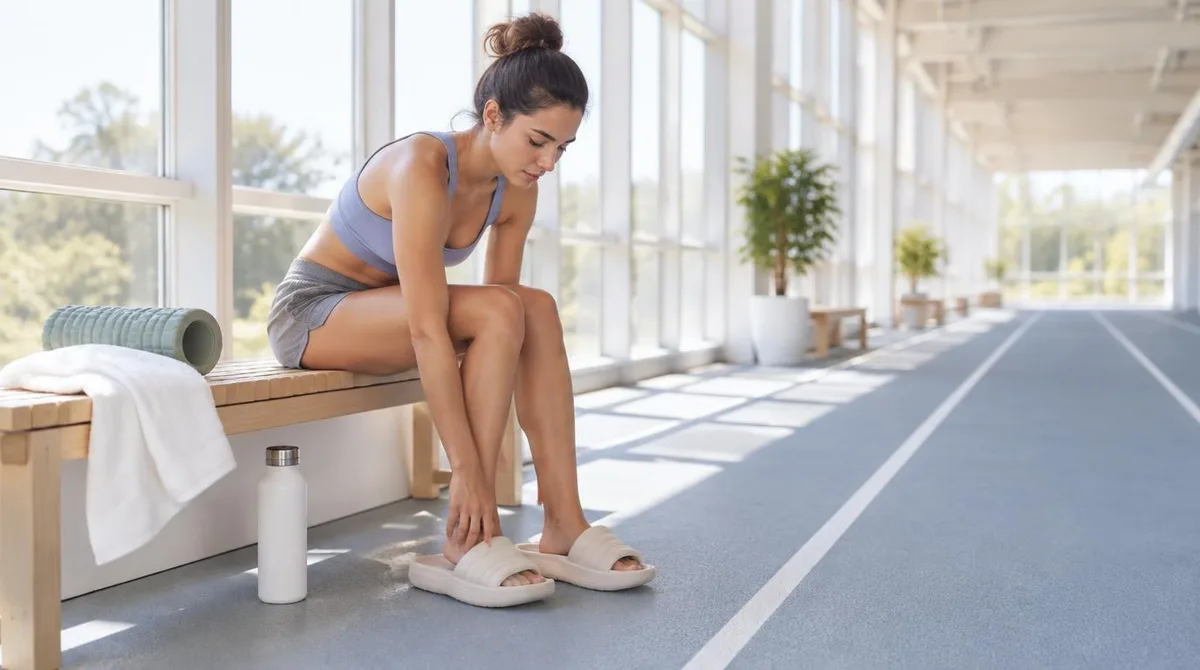
Recovery slides can help tired feet feel better, and a bit of research backs footwear-based recovery after hard efforts. The honest caveat: studies test rocker shoes and supportive sandals, not the slides themselves, and the samples run small. A 2018 trial in the Scandinavian Journal of Medicine and Science in Sports had novice marathoners recover faster in rocker shoes.
The slides themselves are simple: soft, cushioned sandals with support, worn after training. The category sells relief. The science sits nearby, not on top of it. Here is what the studies cover, what they found, and where the pitch runs ahead of the evidence. Readers following this should also see Sore Muscles After a Hard Workout? Here's What the Evidence Says Helps.
What the Best Evidence on Recovery Footwear Shows
The clearest test did not use slides. A 2018 study in the Scandinavian Journal of Medicine and Science in Sports put 25 novice marathoners into unstable rocker shoes or ordinary shoes for a week after a race. The rocker-shoe group regained knee-flexion strength by day one. The control group waited eight days. Muscle hardness, a marker of damage, also cleared faster in the calf and thigh. It was the team's second pass at the question, and this one added objective measures after an earlier questionnaire study had flagged the effect.
What the Sandal Trial Says About Support
The other test looked at pain, not racing. A 2025 randomised trial in the Malaysian Journal of Medical Sciences followed 66 people with plantar fasciitis. One group added arch-supportive, shock-absorbing sandals to eight weeks of physical therapy. These were stubborn cases, with symptoms running six months at the median, and both arms did the same therapy and home exercises. The sandal was the only difference. Both groups improved. The sandal group beat controls on one measure, pain at the first step after rest. On every other measure, the groups matched, and the authors call for bigger trials with longer follow-up.
So What Can Slides Honestly Claim
Slides share the traits that tested well: cushioning, arch support, a cradled shape. That makes the idea plausible. It does not make it proven. No trial in this piece tested branded recovery slides directly, so their specific recovery claims sit in untested territory. Weigh the two studies right, too. The sandal trial randomised 66 people, so its single win carries weight. The rocker trial ran 25, so its verdict stays open until bigger groups repeat it. Comfort still counts for something. A shoe that lets you move easily the day after a hard session helps you keep the habit, which is where adaptation starts. This connects to our earlier piece, Naps for Recovery: How Athletes Use Daytime Sleep as a Tool.
When to See a Professional
Per MedlinePlus, heel pain usually traces to too much stress on the heel bone and the tissue around it. That stress can build into tendinitis, bursitis, or fasciitis. Shoes that fit badly make the list of causes, along with bruises from walking, running, or jumping. These conditions have named treatments: rest, medicines, exercises, taping, and special shoes, and surgery is rarely needed. If heel or arch pain keeps coming back, get it assessed instead of sliding over it.
How to Use Slides Without Overselling Them
- Wear them after training, when feet are loaded and tender, not as a fix for pain that persists.
- Pick cushioning and arch support, the traits the trials tested, over looks alone.
- Keep the rest of recovery honest: food, sleep, and easy movement carry the plan.
- Log how your feet feel across a training week, and let the trend, not the label, decide.
Conclusion: A Comfortable Habit, Not a Proven Tool
Recovery slides earn a spot as an easy habit, and the research on similar shoes gives the idea real support. Rocker shoes sped up recovery after a marathon. Supportive sandals eased one stubborn pain measure in plantar fasciitis. The slides on the shelf have not been tested themselves, though, so buy them for comfort, not for promised adaptations. Your feet still do the healing.