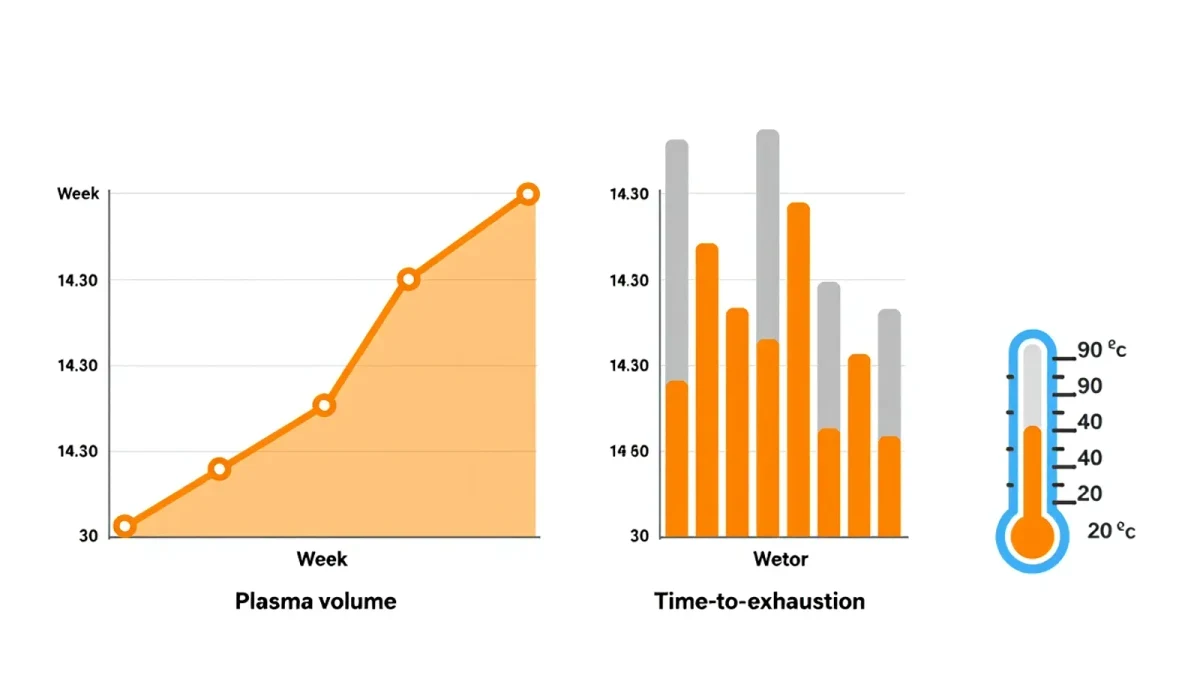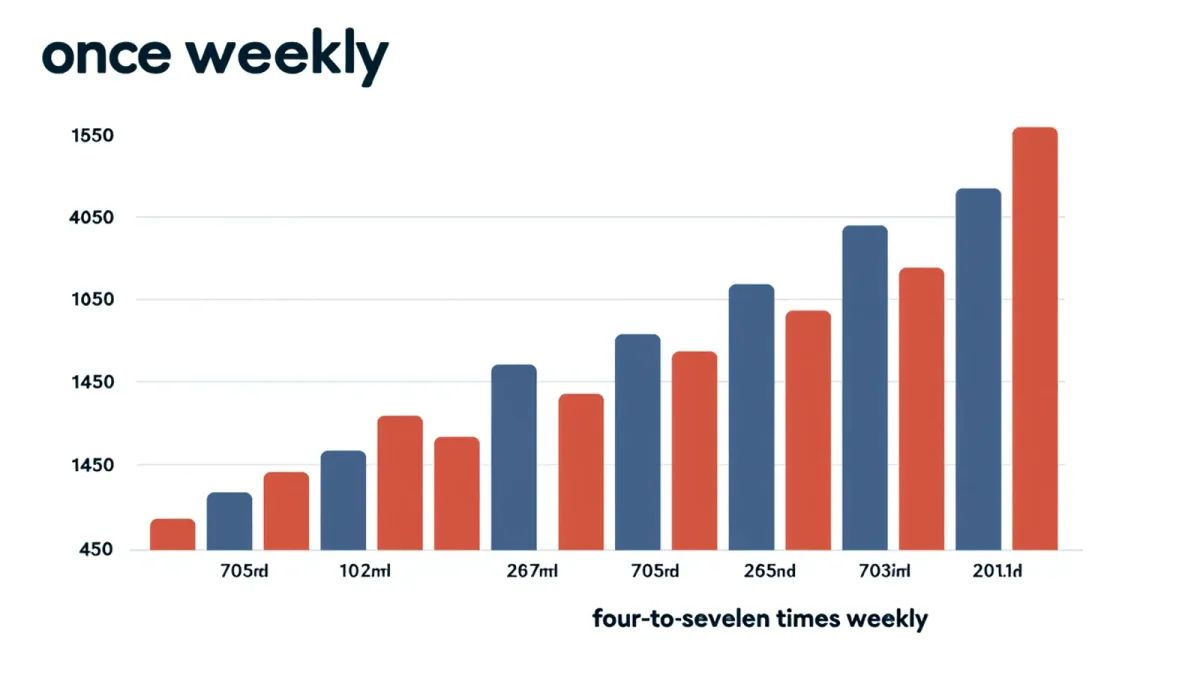

Regular sauna use has the strongest health evidence of any recovery ritual — but read the studies carefully, because much of it is observational. In a 2015 study by Laukkanen and colleagues in JAMA Internal Medicine following over 2,300 middle-aged Finnish men for about 20 years, those who used a sauna 4–7 times per week had roughly half the cardiovascular mortality of once-weekly users. For training specifically, a 2007 study by Scoon and colleagues in the Journal of Science and Medicine in Sport found runners who added about 30 minutes of post-exercise sauna, three times a week, extended run time to exhaustion by a measurable margin over three weeks. Promising on both fronts — with real caveats about who produced the data.
Heat stress is serious business for anyone with heart disease, low or high blood pressure, or pregnancy — clear sauna use with a clinician first.
What does sauna use actually do to the body?
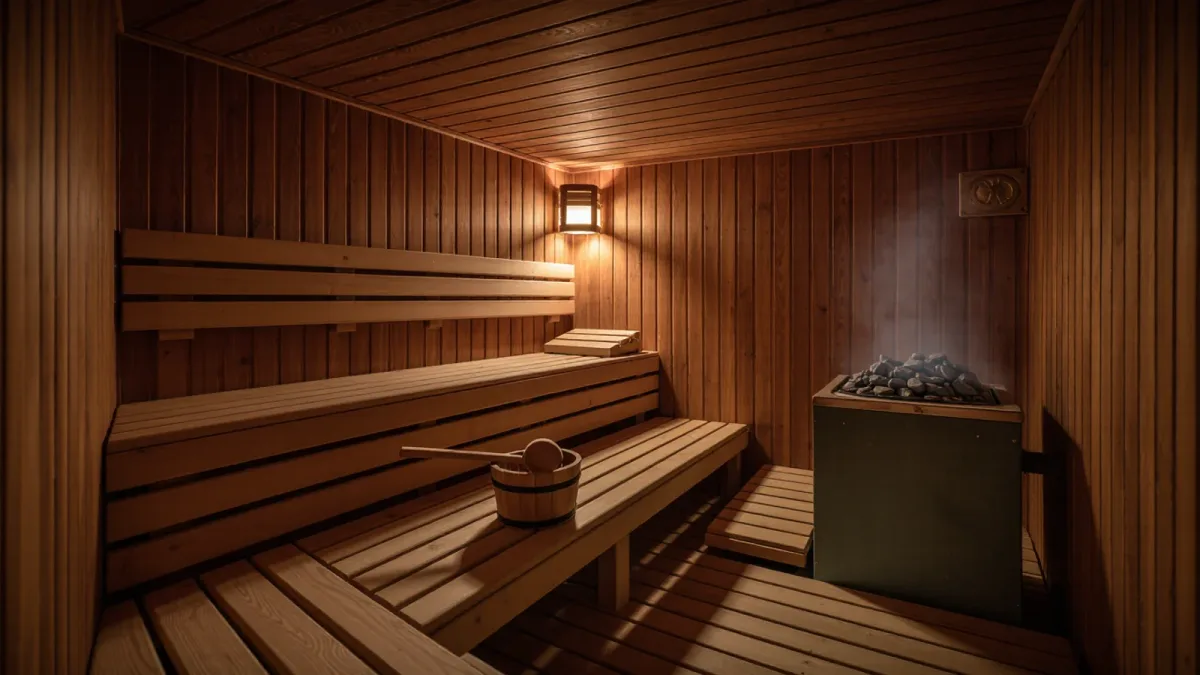
A traditional Finnish sauna runs around 80–100°C with low humidity, the range used in the Finnish cohorts. Sessions in the cited studies ran 15–20 minutes. The immediate responses are well documented: heart rate climbs toward light-exercise levels, skin and core temperature rise, blood vessels dilate, and you lose meaningful fluid through sweat. In plain terms, the cardiovascular system gets a mild workout while the muscles get heat, increased blood flow, and relaxation.
Whether that translates into faster recovery or long-term protection is two separate questions, and the evidence quality differs.
What is the evidence for heart health?
This is the strongest part of the sauna file. The Laukkanen group's Finnish cohort studies — JAMA Internal Medicine in 2015, with follow-up analyses on blood pressure and fatal cardiac events — found dose-response patterns: more frequent sessions, and longer sessions of 19 minutes or more, associated with lower cardiovascular and all-cause mortality compared with infrequent, short use.
Now the caveat, stated plainly: observational studies show association, not causation. Sauna users in Finland differ from non-users — habits, health status, socioeconomic factors. The findings are consistent and biologically plausible, and the mechanisms proposed (repeated vascular conditioning similar to exercise, blood pressure effects) are supported by smaller experimental work. But no randomized trial has assigned people to decades of sauna and measured lives saved. Treat the heart findings as encouraging and real, not proven.
Does sauna help workout recovery?
The recovery evidence is thinner and more mixed:
- Performance: The Scoon study (2007) found post-exercise sauna improved run time to exhaustion by about 32 percent in trained runners — plausibly through plasma volume expansion, a heat-acclimation effect. Small study, one mode, promising but preliminary.
- Perceived recovery: Heat relaxes muscles and most people report feeling recovered after a session. Comfort is real, even where measured repair effects are not.
- Muscle repair: The direct evidence that sauna speeds muscle repair after resistance training is limited. Some small studies report heat shock protein responses; none has shown meaningfully faster strength recovery in a way that replicates consistently. What the sources did not establish: that sauna reduces next-day soreness better than simple rest.
Honest summary: sauna sits somewhere between a well-supported health habit and a modest, partly preliminary training aid.
How should you use a sauna around training?
Common patterns from the cited research and general heat guidance:
| Goal | Pattern | Evidence level |
|---|---|---|
| General health | 4–7 sessions per week, 15–20 min (Finnish cohort pattern) | Observational, strong associations |
| Endurance support | ~30 min post-exercise, 3x/week (Scoon et al., 2007) | Small preliminary trial |
| Relaxation, feel | Whenever it fits, 15–20 min | Comfort, not outcome data |
A practical session
- Finish training and rehydrate first — water plus electrolytes, since sessions can sweat out about a liter of fluid.
- Start with 10–15 minutes if you are new; experienced users sit 15–20.
- Exit if you feel dizzy, nauseated, or your heart is hammering uncomfortably.
- Cool down gradually and drink again afterward.
- Skip alcohol around sauna use — the combination drives dehydration and blood pressure swings.
Who should not use a sauna — or should ask first?
Ask a clinician before regular sauna use if you have unstable heart disease, recent heart attack, severe aortic stenosis, uncontrolled blood pressure, or if you are pregnant. The Laukkanen cohort studied middle-aged Finnish men — women, younger people, and clinical populations are underrepresented, another honest limit. Alcohol plus sauna is the classic Finnish emergency-room combination; skip the beer before, not after.
When to see a professional
See a clinician before starting a sauna habit if you have any cardiovascular diagnosis, take blood pressure medication, or have fainted with heat before. During use, chest pain, confusion, or faintness means exit and seek medical care. And if palpitations or dizziness recur across sessions, that is an assessment question, not a toughness question.
FAQ
How often should I use a sauna for health benefits?
The Finnish cohort data (Laukkanen et al., JAMA Internal Medicine, 2015) found 4–7 sessions of 19+ minutes weekly associated with the lowest cardiovascular mortality versus once weekly. These are associations, not proven cause. Two to three sessions a week is a realistic habit for most people and aligns with the direction of the data.
Should I use the sauna before or after training?
After, for most people. Pre-training heat adds dehydration right before work and can blunt performance. Post-exercise sauna is the pattern the performance research used (Scoon et al., 2007), and evening sessions double as relaxation. Rehydrate between the session and the sauna, keep it 15–30 minutes, and skip it entirely after brutal sessions where dehydration is already significant.
Does sauna count as cardio?
Not really. Heart rate rises in the sauna to roughly light-exercise levels, but you are not moving — no muscle pump, no mechanical load, no training stimulus comparable to actual exercise, per the Finnish study discussions. Think of sauna as a cardiovascular stress that complements training, not a substitute for it. The long-term cohort benefits appeared mostly in people who were active as well.